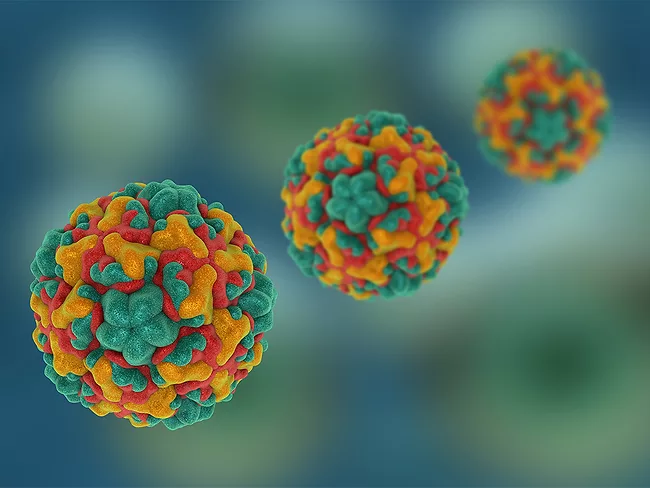
Challenges in developing antiviral agents against rhinoviruses (RVs) include their genetic heterogeneity (over 160 serotypes), rapid evolution of the viral capsid and serotype-specific immunity. To overcome these limitations, alternative approaches targeting host cellular pathways essential for viral replication have been proposed.
An Anglo-American team of researchers has devised a new computational method for quantifying Epstein-Barr virus (EBV) directly from human genome sequences and used this to identify 22 genes that link higher levels of the virus to a range of chronic diseases. The new method sets the scene for further exploration of biobank DNA sequence data to gain greater understanding of the nature and the role of the human virome, the 10(13) – largely unstudied – viral particles that coexist in humans.
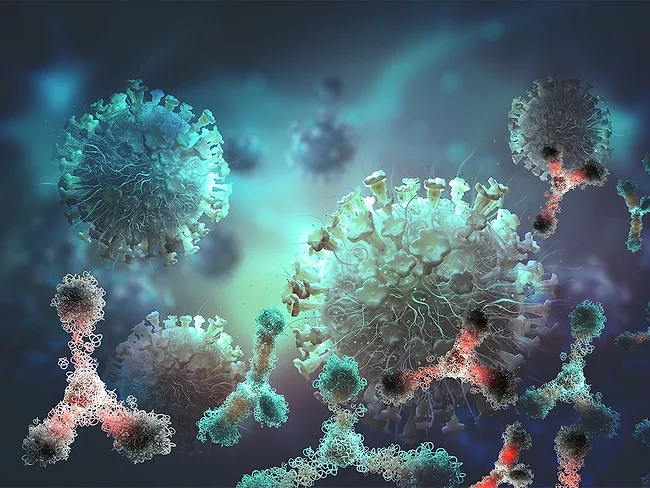
Human respiratory syncytial virus (RSV) and human metapneumovirus (hMPV) can cause severe and lethal bronchiolitis and pneumonia among particularly vulnerable populations, mostly infants, the elderly and immunocompromised patients. Researchers from Vanderbilt University Medical Center have isolated and characterized novel antibodies that cross-neutralize RSV and hMPV.
Nader Pourhassan, the former president and CEO of Cytodyn Inc., was sentenced Jan. 23 to 30 months in prison for his role in a securities fraud scheme to deceive investors about the Vancouver, Wash.-based company’s development of leronlimab as a treatment for HIV and COVID-19.
Although the American Academy of Pediatrics has been releasing guidances on vaccines for decades, the 2026 immunization schedule it issued Jan. 26 is creating some buzz given the U.S. CDC’s newly abbreviated childhood schedule that removed several routine recommendations.
Shionogi & Co. Ltd. and Fosun Pharmaceutical (Group) Co. Ltd. were involved in separate divestment transactions this week, with Shionogi buying out Pfizer Inc.’s stake in Viiv Healthcare Ltd. to lift its holding to 21.7%.
Shionogi & Co. Ltd. and Fosun Pharmaceutical (Group) Co. Ltd. were involved in separate divestment transactions this week, with Shionogi buying out Pfizer Inc.’s stake in Viiv Healthcare Ltd. to lift its holding to 21.7%.
The immune system is a critical factor of host survival, allowing resistance to infections and maintaining tissue integrity. The activation of immune responses requires precise regulation to assure a balance between the benefits and costs of these responses. Moreover, the theory of antagonistic pleiotropy proposes that traits beneficial to early-life fitness may sustain costs that manifest later in life, after the period of strongest natural selection, where aging introduces further complexities for cooperative defenses. As a result of this, hosts of different ages may manifest distinct disease courses despite infection with the same pathogen.
Centre Hospitalier Regional Universitaire de Lille has patented new 3C-like proteinase (3CLpro; Mpro; nsp5) (SARS-CoV-2; COVID-19 virus) inhibitors reported to be useful for the treatment of SARS-CoV-2 infection (COVID-19).
NF-κB-inducing kinase (NIK), also known as MAP3K14, is the key kinase driving noncanonical NF-κB signaling and p100 processing. Researchers from China Pharmaceutical University reported the discovery and preclinical evaluation of a novel NIK inhibitor.
 RSS
RSS