Merck & Co. Inc. is buying Cidara Therapeutics Inc. for $9.2 billion to acquire a late-stage flu candidate and also to outrace blockbuster Keytruda’s looming patent expiration. CD-388, Cidara’s lead candidate, is in a phase III study of adolescents and adults for preventing influenza A and B in those who are at a high risk of developing complications.
In an effort to generate an effective and safer inhibitor, researchers at the University of Cape Town, University of Dundee and Massachusetts Institute of Technology used structure-guided rational design to improve on their previously reported 2,8-diaryl-1,5-naphthyridine inhibitor.
Phase III data from Novartis AG for the malaria treatment Ganlum (KLU-156) show it met the primary endpoint of noninferiority to the current standard of care, Coartem, a combination of artemether and lumefantrine. The results are a step to curbing a problem that has seen rising numbers in recent years.
Investigators from the University of Science and Technology of China and RNAlfa Biotech have described a novel mRNA-based vaccine candidate against Dabie Banda virus (DBV), which has fatality rates of up to 30% in some East Asian countries.
South Korean researchers led by Lee In-suk of Yonsei University have reported the most complete oral microbiome catalog to date, with more than 72,000 genomes. Detailed in Cell Host & Microbe on Nov. 12, 2025, the database is expected to serve as a universal platform for academia and enable “precision microbiome medicine” for the industry, Lee told BioWorld.
Bluejay Therapeutics Inc.’s lead compound, the fully human monoclonal antibody brelovitug (BJT-778), produced positive virologic response data in the company’s phase II study of chronic hepatitis D virus, a condition with no approved treatment in the U.S.
Aligos Therapeutics Inc. and Katholieke Universiteit Leuven (KU Leuken) have synthesized antiviral compounds reported to be useful for the treatment of coronavirus acute respiratory syndrome, norovirus and picornavirus infections.
Chinese Academy of Medical Sciences has divulged imidazopyridine derivatives reported to be useful for the treatment of Acinetobacter infections, particularly A. baumannii infections.
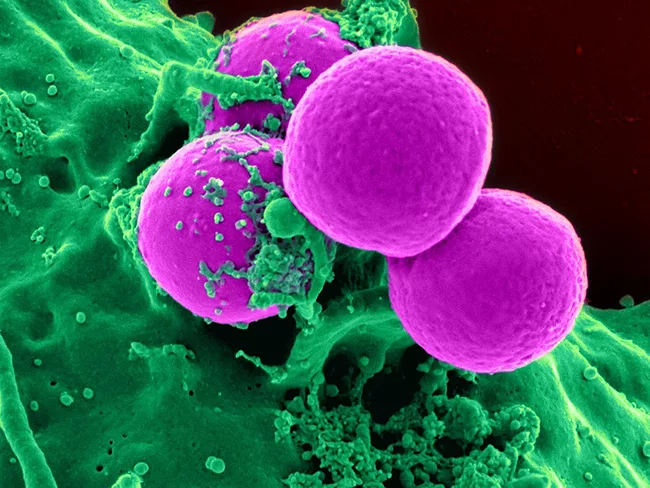
Staphylococcus aureus is a gram-positive bacterium that is ubiquitous on human skin and normally does not cause problems, but when it enters the body, it can cause serious infections. The growing prevalence of methicillin-resistant S. aureus (MRSA) highlights the need for next-generation antibiotics against it.
Industry watchers were surprised when Eli Lilly and Co.’s oral GLP-1 candidate, orforglipron, did not appear among the first nine recipients of the U.S. FDA’s commissioner’s national priority voucher (CNPV) program aimed at shortening regulatory review times, boosting domestic manufacturing and improving affordability. But orforglipron, which recently nailed endpoints in a second phase III trial and has been hailed a potentially best-in-class compound, was among the second batch of six drugs added to the CNPV list.
 RSS
RSS