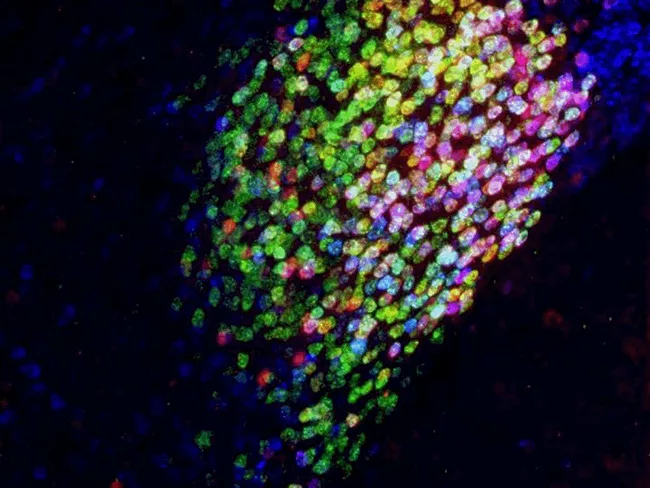
Researchers at Duke University have identified a region in the central amygdala – more often thought of as a processing hub for emotions – that could suppress pain when activated.
A new phase IIb readout at odds with earlier data suggesting PTI-125 would diminish key biomarkers of neuroinflammation and neurodegeneration in Alzheimer’s patients has left Cassava Biosciences Inc. President and CEO Remi Barbier looking for answers.
Despite evidence of efficacy in binge-eating disorder (BED), Sunovion Pharmaceuticals Inc.'s dasotraline's second lease on life is done, for now. Following an initial plan to discontinue the asset in a 2010 portfolio reshuffle, the drug is now being shelved due to the need for additional clinical studies on its benefit-risk profile, parent Sumitomo Dainippon Pharma Co. Ltd. said.
Though Quralis Corp., of Cambridge, Mass., has been developing its pipeline for more than three years, the company now has a $42 million series A in hand to continue researching and developing therapies for amyotrophic lateral sclerosis and frontotemporal dementia.
Shares of Newron Pharmaceuticals SpA (SIX:NWRN) fell more than 71% May 4 on news that sarizotan, its experimental therapy for the rare neurodevelopmental disorder Rett syndrome, failed to meet both the primary and secondary efficacy endpoints of the company's pivotal STARS study, leading it to terminate the program.
Praxis Precision Medicines Inc. CEO Marcio Souza told BioWorld that the line figuratively walked by PRAX-114, a GABAA positive allosteric modulator in major depressive disorder (MDD), means upside relief without the downside of adverse effects.
With regard to agitation in Alzheimer’s disease (AD), doctors “are in a very difficult position right now,” said Axsome Therapeutics Inc. CEO Herriot Tabuteau. That’s because the products currently used off-label are antipsychotics – all of which carry an FDA black box warning “specifically against their use in elderly patients with dementia, including AD,” since they double the risk of stroke and of mortality.
Taysha Gene Therapies Inc., a new Dallas-based company reuniting former executives of Avexis Inc. and its funders, has launched with a $30 million seed financing intended to advance a pipeline of 15 new AAV-based candidates. Its team expects to file four INDs by the end of 2021, starting with one for GM2-gangliosidosis that could move to the clinic later this year.
DUBLIN – Compass Pathways Ltd. raised $80 million in a series B round to continue its development of the psychedelic drug psilocybin in treatment-resistant depression.
A once-daily add-on therapy for Parkinson's disease (PD) used in Europe for years has now gained clearance in the U.S. with FDA approval of Ongentys (opicapone). The drug, an improvement upon generics in its class, will be sold by Neurocrine Biosciences Inc. The medicine, a catechol-O-methyltransferase (COMT) inhibitor first approved by the EMA in 2016, extends the half-life of levodopa, increasing doses of which are required to achieve motor control as PD progresses. Portugal-based Bial-Portela & Ca SA, from which Neurocrine licensed North American rights to the drug, will receive a $20 million award from its partner. Shares of San Diego-based Neurocrine (NASDAQ:NBIX), a neuroscience company focused on treating movement disorders, rose 3.5% following the approval, closing at $101.67 on April 27.
 RSS
RSS