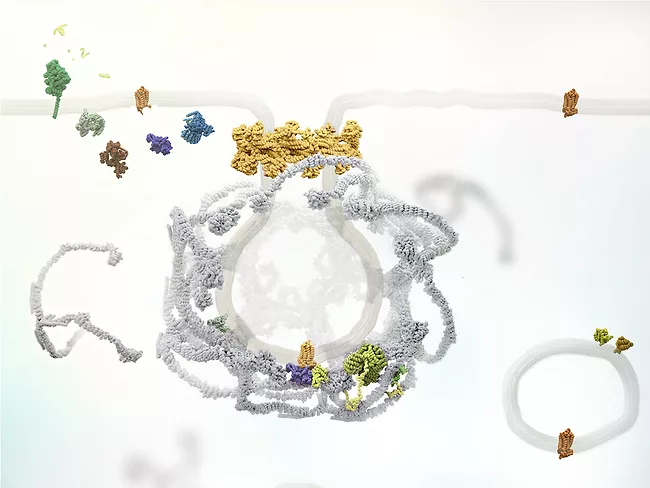
Researchers have developed a new highly effective therapeutic for pain relief by altering the chemical properties of an antinausea drug, netupitant. The modified drug is able to enter the intracellular membrane-bound endosome and target the GPCRs therein, rather than at the cell surface, that leads to optimal pain relief. The study, published in the Proceedings of the National Academy of Sciences (PNAS) on May 22,2023, was led by Nigel Bunnett, Professor and Chair of Molecular Pathobiology at NYU College of Dentistry, and illustrates how GPCR-mediated pain signaling occurs inside the endosomes rather than at the surface, highlighting the need for drugs that can reach receptors within the cells itself.
Mixed phase III study results have Bioxcel Therapeutics Inc. moving ahead to complete the clinical trial while withstanding a hammering from investors. BXCL-501 (dexmedetomidine), a sublingual film being developed to treat bipolar disorders- or schizophrenia-associated agitation, produced clinically meaningful efficacy results in part 1 of the pivotal study with half of the approved dose, but the primary efficacy endpoint was not statistically significant at two hours (p=0.077). BXCL-501 separated from placebo at four hours (p=0.049).
The researchers who enabled patients with spinal cord injuries to walk independently after implanting programmable electrodes below their lesions have now taken things one step further, restoring direct communication from the brain to the spinal cord, enabling the brain rather than an external computer to direct leg movements.
The researchers who enabled patients with spinal cord injuries to walk independently after implanting programmable electrodes below their lesions have now taken things one step further, restoring direct communication from the brain to the spinal cord, enabling the brain rather than an external computer to direct leg movements.
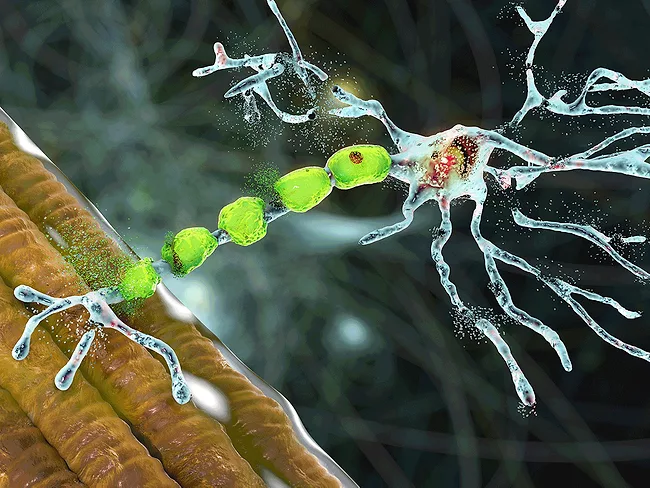
Spinal muscular atrophy (SMA) is caused by mutations in the SMN1 gene, which encodes survival motor neuron 1, leading to reduced protein expression levels and degeneration of motor neurons in the spinal cord, with the consequent muscle atrophy. There is thus a need for new AAV gene therapies for SMA that confer better safety and efficacy.
Researchers have used cell culture experiments to understand how gene expression was affected in a patient with a rare pain insensitivity syndrome, and have identified a network of hundreds of genes whose expression was changed compared to sex-matched controls. Published online in the journal Brain on May 23, 2023, the research is one step toward translating a rare mutation into medications that could provide benefits for common ailments.
“We clearly see an active drug here,” PTC Therapeutics Inc. CEO Matthew Klein said of the 15-lipoxygenase inhibitor vatiquinone for Friedreich’s ataxia (FA), tested in a phase III study called Move-FA that missed the primary endpoint of statistically significant change in modified FA Rating Scale score at 72 weeks. The company will “take one step at a time” decisions about the drug, analyzing the results and then consulting with the U.S. FDA regarding how to proceed, he said. Meanwhile, Wall Street wasn’t happy, and South Plainfield, N.J.-based PTC’s shares (NASDAQ:PTCT) closed May 24 at $46.95, down $11.46, or 19.6%.
Research at Reunion Neuroscience Inc. has led to the discovery of benzyltryptamine compounds acting as 5-HT2A receptor agonists. These compounds are reported to be useful for the treatment of depression, alcoholism, cocaine addiction, inflammation, cluster headache neurological and post-traumatic stress disorder.
Researchers from Kyungpook National University presented data from a study that aimed to investigate the endogenous mechanisms involved in granule cell dispersion (GCD) and its role in epileptic seizures in temporal lobe epilepsy (TLE).
 RSS
RSS