Once again, the World Trade Organization (WTO) postponed a decision on a temporary intellectual property (IP) waiver for COVID-19 vaccines and other related medical products.
Dangerous blood clots and thrombocytopenia, rare simultaneous side effects seen with two adenoviral vector vaccines from Astrazeneca plc and Johnson & Johnson, as well as a worldwide spike in COVID-19 cases and deaths, primarily in India, has set the stage for what could soon become the next big vaccine option, a protein subunit candidate from Gaithersburg, Md.-based Novavax Inc.
LONDON – A single dose of Pfizer Inc./Biontech SE’s COVID-19 vaccine does not promote a strong enough immune response to provide protection against variants of SARS-CoV-2, including the Kent variant B.1.1.7, which as of April 29 had caused 226,635 confirmed infections in the U.K.
Vaccitech plc and Werewolf Therapeutics Inc. opened the last day of April with contrasting IPOs. Both priced mid-range, with Vaccitech raising $110.5 million, similar to Werewolf's $120 million haul. However, American depository shares of Vaccitech (NASDAQ:VACC), co-developer of Astrazeneca plc’s COVID-19 vaccine, fell 17.1% to $14.10 from a $17 open, while shares of cancer therapy developer Werewolf (NASDAQ:HOWL) boomed – until they didn't – climbing to $24 before closing about where they started, at $16.10.
Emergent Biosolutions Inc. CEO Robert Kramer assured investors that he takes “full responsibility” for woes that beset the firm after the FDA’s Form 483 found serious manufacturing problems at the Baltimore, Md.-based Bayview plant. “You have my commitment that we're going to do everything we can to resolve these issues quickly, and as safely as possible,” he said during an April 29 conference call on first-quarter financial results.
LONDON – The latest tranche of data from an array of large-scale COVID-19 studies running in the U.K. provides real-world evidence that vaccines have a dramatic effect in preventing hospitalization and death, but that there are a very small number of vaccine failures. The data cover 3,842 people who received a vaccine and subsequently were admitted to the hospital between Dec. 8, 2020, when the national vaccination rollout began, and the data cutoff of April 10, 2021.
LONDON – A large scale U.K. study looking at the impact of COVID-19 vaccinations on antibody responses and new infections in 373,402 people in the general population has shown a single dose of vaccine cut infections by 65%.
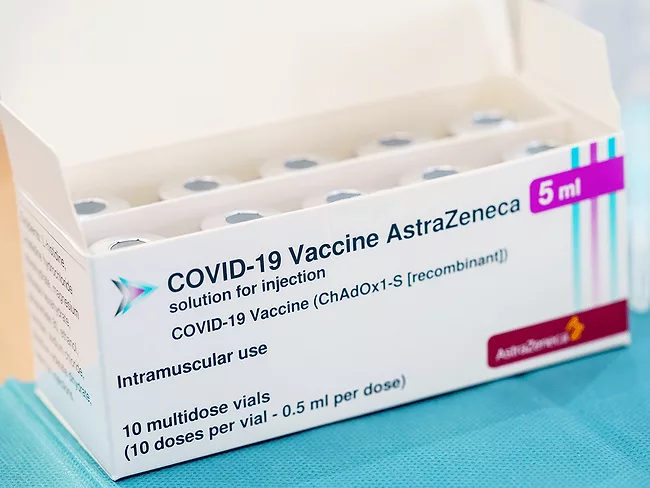
Astrazeneca plc’s saga of its COVID-19 vaccine continued this week with the European Commission (EC) deciding to begin legal action against the Cambridge, U.K.-based company, claiming it has failed to deliver doses in line with its contract.
Shares of Inovio Inc. (NASDAQ:INO) fell 25% to $6.85 on April 23 after the company said the U.S. Department of Defense scratched funding for the phase III portion of an ongoing trial of its COVID-19 vaccine candidate, INO-4800, in light of the broad availability of other COVID-19 vaccines in the U.S. The news followed recent phase I data showing '4800 performed about in line with already available competitors against SARS-CoV-2 variants now dominant in the U.S.
DUBLIN – The European Medicines Agency (EMA) has reiterated its support for Astrazeneca plc’s Vaxzervia COVID-19 vaccine, following an interim analysis of a data review, which the agency’s Committee on Human Medicinal Products (CHMP) has conducted over the past two weeks.
 RSS
RSS