New dose-escalation data from Verastem Oncology’s phase I/II cancer study in China prompted the company to say it was encouraged by the efficacy results. However, investors felt otherwise, as the stock lost about 20% of its value the day the initial results were released.
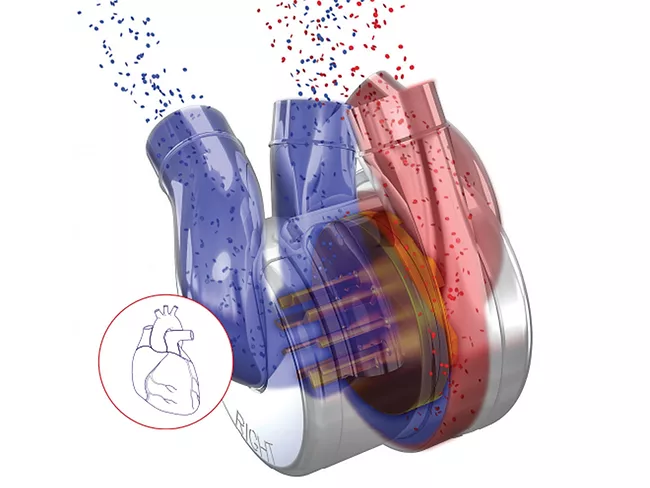
The U.S. FDA’s decision to grant breakthrough device designation for Bivacor Inc.’s titanium total artificial heart (TAH) sent real hearts aflutter at the Huntington, Calif.-based company’s headquarters. While the designation supports use of the TAH as a bridge to transplant for adults with biventricular or univentricular heart failure for whom current options are insufficient or unsuitable, Bivacor hopes its device will eventually serve as a long-term heart replacement.
The Trump administration released its budget proposal for fiscal year 2026, which would chop roughly 40% from the NIH budget over the current fiscal year — a proposal that might not find much support on Capitol Hill.
The U.S. FDA declined to appeal the outcome of a lawsuit eviscerating the agency’s final rule for regulation of lab-developed tests despite a 60-day window to do so.
Sanofi SA is to acquire Blueprint Medicines Inc. in a $9.5 billion deal that will give the French pharma ownership of a marketed rare disease immunotherapy heading toward blockbuster status, a follow-on product in phase II/III, and a phase II clinical program relevant to a number of autoimmune diseases.
Shares of Lyra Therapeutics Inc. soared more than 310% on data from its second phase III trial testing drug-device candidate LYR-210 in patients with chronic rhinosinusitis, with results from the Enlighten 2 study showing statistical significance on primary and key secondary endpoints and offering hopes of a regulatory pathway ahead.
Biontech SE and Bristol Myers Squibb Co. are teaming up to develop Biontech’s BNT-327 in a deal possibly worth over $11 billion. BNT-327 is in the hot new class of bispecific antibodies targeting programmed death-1 (PD-1) or its ligand (PD-L1) and vascular endothelial growth factor (VEGF). The bispecifics take advantage of two well established mechanisms of action that help tumors grow; PD-1/PD-L1, which tells immunogenic T cells not to attack the tumor, and VEGF, which tumors excrete to produce new blood vessels to supply oxygen and other nutrients to the tumor.
The U.S. Department of Justice is reshuffling its enforcement focus for the coming three years per a May 12 memo attributed to Matthew Galeotti, director of the department’s criminal division. Galeotti said federal attorneys should avoid prosecutorial adventurism in an effort to strike what he described as “an appropriate balance” between enforcement and “unnecessary burdens on American enterprise.”
A dynamic chart of the latest executive orders (EOs) from the Trump administration that have been published in the Federal Register and that directly impact the biopharmaceutical and medical technology sectors.
For the second time in as many months, the lack of statistically significant overall survival data sent shares of Summit Therapeutics Inc. sliding, despite otherwise positive findings for PD-1/VEGF bispecific candidate ivonescimab in non-small-cell lung cancer. But analysts noted the stock reaction overlooks the consistency of the efficacy data to date, as well as the fact that the phase III Harmoni study marks the first pivotal trial testing ivonescimab in a global population.
 RSS
RSS