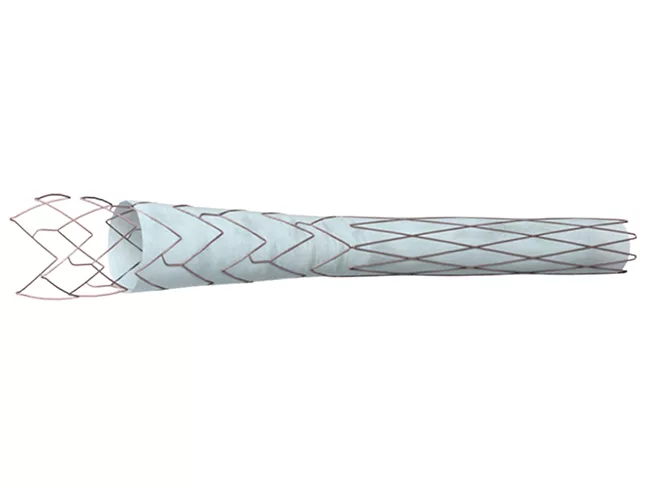
Boston Scientific Corp. reported the latest setback in its transcatheter aortic valve replacement (TAVR) aspirations with the news that it is officially discontinuing worldwide sales of its Acurate neo2 and Acurate Prime systems
The U.S. FDA issued general correspondence letters to two device testing labs located in China. This is the latest in a series of moves by the agency to crack down on falsified or otherwise invalid device testing data.
The U.S. FDA approved Phraxis Inc.’s Endoforce Connector for endovascular venous anastomosis, which eliminates the need for surgical dissection for individuals undergoing hemodialysis for kidney failure. The device is designed to reduce tissue trauma and improve long-term graft performance.
U.S. FDA commissioner Marty Makary appeared at the May 22 Senate Appropriations Committee with the news the White House proposed an FDA budget for fiscal 2026 of $6.8 billion including user fees. This is a cut of 11.5% that will not likely go over well on Capitol Hill as the FY 2026 budget process unwinds.
Fujirebio Diagnostics Inc.’s Alzheimer’s disease assay received the U.S. FDA’s first clearance for a blood test for the debilitating neurodegenerative disease. Fujirebio’s Lumipulse G pTau217/ß-Amyloid 1-42 plasma ratio is indicated for the early detection of amyloid plaques associated with Alzheimer’s disease in symptomatic individuals aged 55 years and older.
Companies new to the world of U.S. FDA regulation are often unaware of how detailed the agency’s inspections are, which might be the case with the October-November 2024 inspection of Noah Medical Inc.
U.S. Health and Human Services Secretary Robert Kennedy made his first appearance May 14 before the Senate Health, Education, Labor and Pensions (HELP) Committee since his January confirmation hearing. Chaos, testy arguments, accusations and surprising agreements ensued.
The U.S. FDA’s April 4, 2025, warning letter to ICU Medical Inc. cited the company for failure to file a new 510(k) for changes to software used in an infusion pump, but those changes may have been driven by problems with the pumps the company acquired when it picked up Smiths Medical in 2022. The FDA also issued a warning letter to Epicare Acquisitions LLC related to its Zenith family of laser hair removal systems.
As the U.S. Department of Health and Human Services (HHS) and its agencies begin weeding out old regulations, the department is requesting public input to help identify and eliminate outdated or unnecessary regulations.
The U.S. FDA typically announces its inspections at facilities located outside the U.S. – a courtesy not extended to domestic manufacturing sites. This is about to change per an agency press release quoting commissioner Marty Makary as describing the disparate treatment as a double standard.
 RSS
RSS