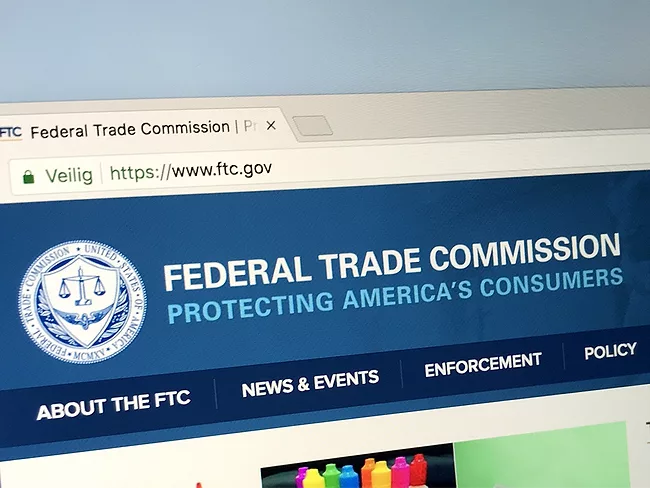
The U.S. Federal Trade Commission announced a $14.6 million grant it received for an upgrade of its IT infrastructure. The same grant mechanism is leveraged by the Department of Justice, which is a clear sign that U.S. enforcement will be more vigorously enabled by sophisticated analytics going forward.
Radiopharm Theranostics Ltd. announced that the U.S. FDA has cleared the IND application for betabart (RV-01), its Lu177-B7H3 monoclonal antibody designed with strong affinity for the 4Ig isoform of B7-H3 that is highly expressed in tumors and not in healthy tissues.
Australia’s Therapeutic Goods Administration proposed to adopt a 2021 EU guideline on quality documentation for drugs used with medical devices including co-packaged products, a demonstration of the impact of EU regulations on Australia’s own regulatory approach.
Uromems SAS received investigational device exemption (IDE) approval from the U.S. FDA, and clearance from the French National Agency for the Safety of Medicines and Health Products (ANSM), to begin a pivotal trial of its Uroactive smart implant.
Caranx Medical SAS secured clearance from the U.S. FDA for Tavipilot Soft, its AI-powered software which provides real-time intraoperative guidance during transcatheter heart valve replacement (TAVR) procedures. The software, which tracks anatomical and instrumental landmarks in real-time to enable precise and accurate heart valve positioning and delivery, will allow a broader number of cardiologists to perform this complex procedure.
Lumos Diagnostics Inc.’s stock shot up 162% Wednesday morning on news that it signed a pivotal commercial deal with Phase Scientific International Ltd to expand its reach into the U.S. market for its Febridx rapid, point-of-care test for bacterial infections.
Synchrony Medical Ltd. received the greenlight from the U.S. FDA for its Libairty airway clearance system which is expected to transform the lives of people with chronic lung diseases. The company is now looking to raise $5 million in series A funding to support the launch of the product in the U.S. later this year.
The U.S. FDA recently posted three alerts under the agency’s early alert program, including an alert for the V6 and V8 versions of the Sigma Spectrum infusion pumps by Baxter International Inc., which was the result of a mix-up in software installation.
Cochlear Ltd. heard good news from the U.S. FDA, as the agency approved its next-generation cochlear implant, the Nucleus Nexa System, the first smart cochlear implant system. Cochlear expects to launch the new products in the U.S. in the next few months, Brendan Murray, vice president for Cochlear Implant products portfolio and strategy told BioWorld.
The next FDA device user fee agreement is formally in negotiations but a recent agency report shows device makers are increasingly keen to interact with FDA reviewers. This is a fact that may make it difficult to keep the next user fee schedule from increasing dramatically over the current agreement.
 RSS
RSS