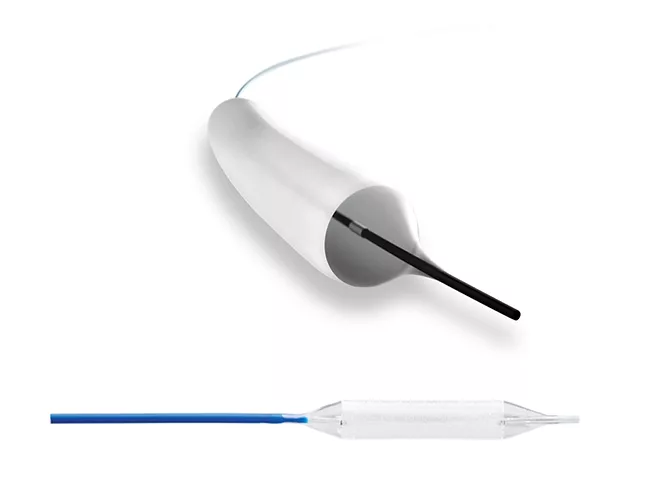
Fist Assist Devices LLC received a breakthrough device designation from the FDA for its Fist Assist Model FA-1 device for patients with end-stage renal disease (ESRD). The pre-surgical dilation device promotes arteriovenous (AV) fistula creation in renal failure patients with inadequate vein size for creation of an AV fistula for hemodialysis. An AV fistula is a surgical connection between an artery and a vein used as an access point for dialysis.
The FDA’s regulation of medical technology may be assumed to have a number of unintended consequences, and one of those seems to be the lawsuit between Johnson & Johnson (J&J) and Auris Health Inc. Due to a 2018 FDA policy change regarding 510(k) devices, a robotic surgery system acquired by a J&J subsidiary from Auris was forced into the lengthier de novo premarket channel. This change ultimately helped derail the development effort for the Auris Iplatform surgical system and thus played a role in the $2.35 billion lawsuit alleging that J&J had engaged in fraud in its deal with Auris over the acquisition.
Clinical trial fraud has not been on the radar screen for drug and device makers in recent years, but there have been several episodes in which the operators of clinical trial sites had fabricated data for clinical trials. U.S. deputy assistant attorney general Arun Rao said recently that clinical trial fraud is now front and center for federal attorneys, raising the risk that any documentation errors for clinical trials will create a massive liability for the sponsor.
The FDA has granted approval to Urotronic Inc. for its Optilume urethral drug-coated balloon (DCB) for the treatment of male urethral strictures. The device inhibits new scar tissue growth that may form after endoscopic dilations via the controlled release of paclitaxel, an antiproliferative that inhibits scar tissue formation.
Intervene Inc. received breakthrough device designation from the FDA for its treatment for chronic venous insufficiency (CVI), Blueleaf endovenous valve formation system, which makes new venous valves in the leg using the patient’s own vein tissue. The catheter-based system splits and stretches the vein wall to create a new leaflet. In a recently published study, 14 patients underwent the procedure, of which 13 successfully had at least one new valve created. No patients experienced adverse events during the procedure and no deep venous thromboses developed through a one-year follow up period.
At long last, the FDA has released information on a potential regulatory framework for 3D device printing at the point of care (POC), just the first step in the implicit guidance development process. The document highlights several potential tripwires for device manufacturers and operators of health care facilities, but the large number of complex questions posed by the paper suggests that a final guidance is not likely to arrive any time soon.
Theradaptive Inc. has received an FDA breakthrough medical device (BMD) designation for its Osteo-Adapt SP spinal fusion implant for transforaminal lumbar interbody fusion to treat degenerative disc disease, spondylolisthesis, or retrolisthesis. Under the program Theradaptive will enjoy priority review for its spinal bone growth implant and interactive advice for continued development as well as clinical trial protocols during premarket review.
PERTH, Australia – The FDA has cleared Immunexpress Inc.’s 510(k) for its Septicyte rapid diagnostic test for sepsis that quantifies the relative expression levels of genes involved in a patient's immune response to infection to aid in a diagnosis in one hour for patients suspected of sepsis. The test uses peripheral blood gene expression biomarkers to provide a probability of sepsis in patients presenting with clinical signs of systemic inflammation.
The FDA’s device center is required to develop and publish special controls for devices that are deemed class II items via the de novo petition process, and five such declarations were posted Dec. 1 to the Federal Register. One of these de novo classifications, for conditioning tools for eating disorders, was the subject of a de novo petition filed in 2007 and granted in 2011.
The FDA granted 510(k) clearance to Metame Health Inc.’s Regulora, the company’s prescription digital therapeutic (PDT) for abdominal pain associated with irritable bowel syndrome (IBS). Regulora provides gut-directed hypnotherapy in a smartphone app that is designed to help patients better manage their symptoms and address miscommunication between the brain and gut that contributes to sensations of pain.
 RSS
RSS