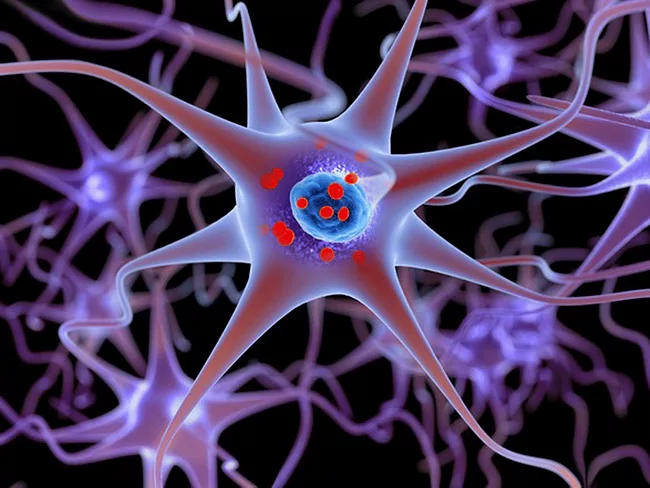
In brain research, be it basic or clinical, neurons have long hogged the limelight. But at the 2023 European Meeting on Glial Cells in Health and Disease, neurons take a back seat to glia – cell types that have often been described as support cells and treated as an afterthought, but that play critical roles in all aspects of brain function, including information processing.
Researchers from the University of North Carolina, Chapel Hill and affiliated organizations have reported the development and preclinical evaluation of [18F]F-ZW-cinacalcet, a novel PET agent targeting the calcium-sensing receptor (CaSR) for parathyroid imaging.
Researchers from Ermium Therapeutics SAS have presented preclinical data for the novel chemokine CXCR4 receptor ligand ER-000145, being developed for the treatment of type 1 interferonopathies, such as systemic lupus erythematosus (SLE).
Evidence of mitochondrial and lysosome dysfunction underlying Parkinson’s disease (PD) was discussed during several talks at the World Parkinson Congress 2023 (WPC) held in Barcelona. Edward A. Fon, from McGill University in Montreal, explained how eyes turned to mitochondria as key players in PD more than 30 years ago and how the explosion of genetics was fundamental to advance the knowledge and research in PD.
Researchers from Duke University presented the discovery and preclinical evaluation of [211At]YF-2, a next-generation prostate-specific membrane antigen (PSMA)-targeted radiopharmaceutical.
Actinium-226 (226Ac) has been previously proposed as a potential surrogate isotope for the development of 225Ac radiopharmaceuticals for targeted alpha therapy (TAT). The benefits of 226Ac include its theoretically superior therapeutic potency as well as a short half-life of its progeny, expected to minimize the toxicities. Researchers from TRIUMF, University of British Columbia and affiliated organizations recently reported the discovery of a novel matched 225/226Ac-radiopharmaceutical pair, [225Ac]crown-TATE and [226Ac]crown-TATE, and conducted studies aiming to compare the radiation dosimetry of these candidates.
The loss of the dopaminergic neurons in the substantia nigra and their projections in the putamen cause motor disabilities, which are one of the main hallmarks in patients with Parkinson’s disease (PD).
Researchers from the Mayo Clinic have reported findings from the preclinical evaluation of a novel cardiac targeting peptide (CTP)-based radiotracer – [68Ga]NOTA-CTP – being developed as a myocardial perfusion imaging PET probe.

 RSS
RSS