CSPC Pharmaceutical Group Ltd. has obtained clearance from China's National Medical Products Administration (NMPA) to conduct clinical trials in China with SYH-2055, an oral small-molecule 3C-like protease (3CLpro) inhibitor against SARS-CoV-2.
A strong clinical association has been observed between epilepsy and the development of depression, however, it is difficult to study individual molecular and cellular mechanisms underlying these comorbidities in animal models. Researchers from Rutgers University have aimed to develop a cell-type-specific monogenic mouse model of epilepsy and depression comorbidities, which could serve as a tool for identifying disease mechanisms as well as for target and drug screening.
Researchers from Praxis Precision Medicines Inc. presented the discovery and preclinical evaluation of a novel voltage-gated sodium channel (Nav) blocker, PRAX-628, being developed as a potential antiepileptic drug candidate.
Pepgen Inc. has announced new preclinical data supporting the progression into clinical trials of PGN-EDODM1, its product candidate in development for the treatment of myotonic dystrophy type 1 (DM1).
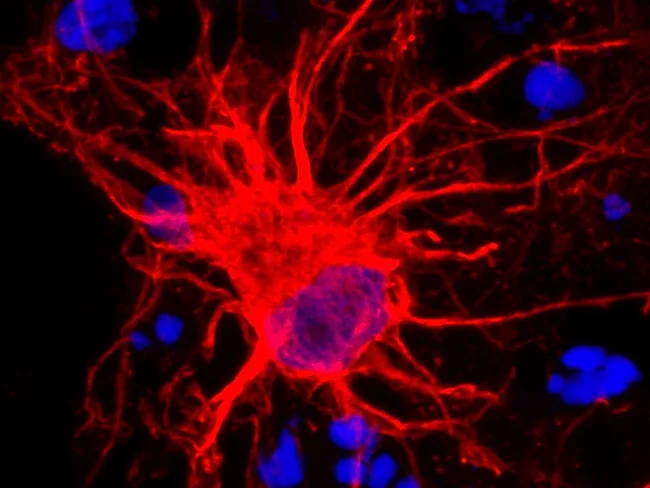
Major depressive disorder (MDD) was linked to impaired neural connectivity caused by astrocyte dysfunction, according to a study from the Southern Medical University in Guangzhou in collaboration with the University of Hong Kong.
Metrion Biosciences Ltd. and The KCNC1 Foundation have established a collaboration to progress a hit identification research project for small-molecule modulators of the potassium ion channel Kv3.1, targeting KCNC1-related disorders.
Research led by Chalmers University of Technology and the Karolinska Institute in Sweden shows that glycosaminoglycans in the blood and urine can be used to detect 14 early-stage cancers.
New research has identified a novel receptor that interacts with the angiotensin-converting enzyme 2 (ACE2) by which the SARS-CoV-2 enters host cells, and shown it can be inhibited with marketed drugs, reducing expression of ACE2 and blocking viral entry.
The positively charged nanoparticle polyamidoamine generation 3 (P-G3) can be specifically targeted to either visceral or subcutaneous fat, and affects both types of fat in different ways, researchers from Columbia University reported in two papers recently published. The studies, published online in Nature Nanotechnology on Dec. 1, 2022, and in Biomaterials on Nov. 28, 2022, are both “a conceptual advance” and “quite amenable to translation,” co-corresponding author Kam Leong told BioWorld.

 RSS
RSS