Lucy Therapeutics Inc. has announced promising preclinical data for multiple compounds in its lead program for Parkinson's disease, including two lead small-molecule agents, LucyTx-1209 and LucyTx-1212.
Loss of Paneth cells and their antimicrobial granules has been linked to a compromised intestinal epithelial barrier, which is a hallmark of Crohn’s disease.
Glaucoma is an eye disease that damages the optic nerve, with the main cause being ocular hypertension due to high resistance to the outflow of aqueous humor.
Investigators from the University of Copenhagen, Denmark have developed a cell line engineered to express bone morphogenetic protein 2 (BMP-2) and key extracellular matrix genes and critical factors that regulate and support human hematopoiesis. The findings were reported in the Oct. 12, 2022, issue of Science Translational Medicine. One of the clinical applications that the research team is interested in involves exploiting the MSOD-B hOss as a tumor model for bone colonization in the context of various cancers.
Fibroblasts expressing the tumor suppressor p16INK4a (a marker of senescence) stimulated lung stem cells from young mice to repair damaged tissue, according to a study from the University of California, San Francisco (UCSF). The finding calls into question therapies that eliminate these senescent cells without considering their beneficial role in tissue homeostasis.
Scientists from the Global Biobank Meta-Analysis Initiative (GBMI) , founded in 2019, have published initial results in the Oct. 12, 2022 issue of Cell Genomics. In a series of papers, the investigators showed that the data collected by multiple biobanks could be harmonized and jointly analyzed, despite initial differences in recruitment strategies, sample collection, and definitions of diseases. Joint analysis identified new risk loci for more than a dozen common diseases, while another paper showed that such joint analysis could also be used to identify such loci for the rare disease idiopathic pulmonary fibrosis (IPF).
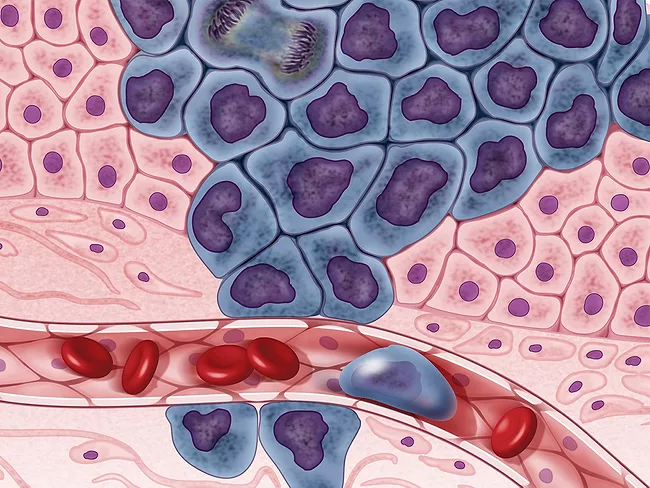
About 50% of patients with lung cancer present with metastatic disease; researchers have shown that breast cancer metastasis-suppressor 1 (BRMS1) suppresses metastases in non-small-cell lung cancer and other solid tumors due to its ability to function in a multiprotein histone deacetylase transcriptional corepressor complex or as an E3 ligase to control the degradation of p300 acetyltransferase.
Metriopharm AG has received a grant of €125,000 from charity Duchenne UK that will support development of the company's lead compound MP-1032 (luminol sodium salt) for the treatment of Duchenne muscular dystrophy (DMD).
 RSS
RSS