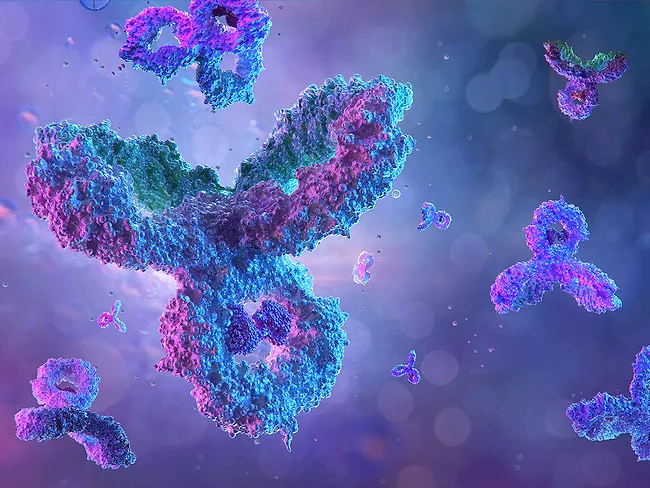
Researchers from Mount Sinai Center for Translational Medicine and Pharmacology at Icahn School of Medicine at Mount Sinai and colleagues have developed a therapeutic humanized antibody that blocks the action of follicle-stimulating hormone (FSH), a pituitary hormone previously thought to only play a role in fertility.
Adeno-associated virus (AAV)-based gene therapy is considered a promising strategy to treat hearing loss. However, its clinical application is limited by the genetic heterogeneity of hereditary hearing loss, requiring gene-specific analysis and approach optimization for broader treatment applications.
Rallybio Corp. has received an equity milestone payment of $12.5 million from Recursion Pharmaceuticals Inc. triggered by the initiation of additional preclinical studies for REV-102, an investigational oral ENPP1 inhibitor.
The mechanisms behind diabetic cardiomyopathy (DCM) have been deeply studied but still not well-established within the scientific community. Mutations in cardiac junction proteins may result in heart failure and arrhythmia. ER degradation enhancing α-mannosidase like protein 2 (EDEM2) is involved in the degradation of misfolded N-glycosylated proteins, but its role in the heart is not clear and was investigated.
Researchers from the CUNY Advanced Science Research Center and their collaborators recently published a paper in Science Advances on Aug. 27, 2025, about synthetic carbohydrate receptors (SCRs) and their potential as broad-spectrum antivirals by targeting the viral envelope N-glycans. They described the antiviral activity of a series of tetrapodal SCRs both in vitro and in vivo, showing their potential as broad-spectrum inhibitors of viral infection.
Enlaza Therapeutics Inc. will take charge of research through nominating candidates in its potentially $2 billion-plus deal with Vertex Pharmaceuticals Inc. For its efforts, Enlaza is getting $45 million in an up-front payment and equity investment, plus the opportunity to bring in more than $2 billion in research, development, regulatory and commercial milestones and tiered royalties on net sales.
Aglaeapharma Inc. has described compounds acting as α2-adrenoceptor agonists reported to be useful for the treatment of rhinitis, pain, insomnia, inflammatory disorders, glaucoma, cancer, anesthesia and acute kidney injury, among others.
Anima Biotech Inc. has divulged collagen 1 (COL1) translation inhibitors reported to be useful for the treatment of cirrhosis, fibrosis, nonalcoholic or metabolic dysfunction-associated steatohepatitis (NASH/MASH), alcoholic fatty liver and autoimmune diseases.

 RSS
RSS