Haisco Pharmaceutical Group Co. Ltd. has entered into an exclusive licensing agreement with Abbvie Inc., granting Abbvie the exclusive rights to develop, manufacture and commercialize novel medicines for the treatment of pain globally, excluding mainland China, Hong Kong and Macau.
The development of glucagon-like peptide 1 receptor (GLP-1R) agonists, such as semaglutide and tirzepatide, has been a game changer in the clinical management of overweight and obesity, but there is interpersonal variability in efficacy of these medications for weight loss, as well as in the incidence of undesired side effects. Investigators from the 23andMe Research Institute have shed some light on how variations in the GLP-1R and GIP receptor (GIPR) genes impact their effectiveness and the occurrence of side effects.
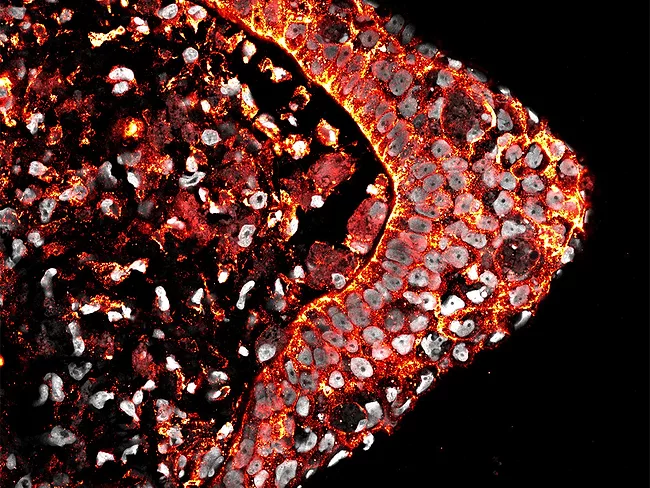
The loss of regenerative capacity in mammals over the course of evolution may be linked to certain environmental conditions rather than to a genetic limitation. Tissue stiffness around an amputated area, oxygen availability, or epigenetic regulation could determine this ability, according to two simultaneously published but independent studies published in Science, as reported by BioWorld yesterday.
More than four decades on from the approval of the first biologic drug, the industry has reached a tipping point, and biotech drugs now outnumber small molecules in the global R&D pipeline. At the start of the biotech industry, progress was slow. Between 1983 and 1995, the U.S. FDA approved an average of two biologics each year. Now, biologics have taken the lead by the smallest of margins, accounting for 50.1% of drugs in development at the start of 2026, according to the Pharma Annual Review 2026, published by Pharmaprojects, a firm that tracks global pharma R&D.
Nyrada Pty Ltd. has synthesized new short transient receptor potential channel 6 (TRPC6) and 7 (TRPC7) antagonists potentially useful for the treatment of cancer.
Aurigene Oncology Ltd. and Olema Pharmaceuticals Inc. have disclosed new proteolysis targeting chimera (PROTAC) compounds comprising an E3 ubiquitin ligase CBL-B (CBLB)-binding moiety coupled to a histone acetyltransferase KAT6A (MOZ; MYST-3)-targeting moiety. They are described as potentially useful for the treatment of cancer.
Avelos Therapeutics Inc. has divulged new sulfur or selenium-containing compounds acting as DNA polymerase θ (POLθ; POLQ) inhibitors potentially useful for the treatment of cancer.
A Purdue Research Foundation patent details the discovery of 5/5-5/6 bisaryl compounds acting as mitogen-activated protein kinase kinase kinase 7 (MAP3K7; TAK1) inhibitors reported to be useful for the treatment of multiple myeloma and inflammatory disorders.
Beone Medicines I GmbH and Beone Pharmaceutical (Suzhou) Co. Ltd. have identified new macrocyclic GTPase KRAS inhibitors potentially useful for the treatment of cancer.
In a recent study published in the Journal of Cancer Research and Clinical Oncology, researchers from The First Affiliated Hospital of Guangxi Medical University and The First People’s Hospital of Qinzhou (China) investigated the expression pattern, molecular mechanisms and clinical relevance of GALNT1 in breast cancer.
 RSS
RSS