More than four decades on from the approval of the first biologic drug, the industry has reached a tipping point, and biotech drugs now outnumber small molecules in the global R&D pipeline. At the start of the biotech industry, progress was slow. Between 1983 and 1995, the U.S. FDA approved an average of two biologics each year. Now, biologics have taken the lead by the smallest of margins, accounting for 50.1% of drugs in development at the start of 2026, according to the Pharma Annual Review 2026, published by Pharmaprojects, a firm that tracks global pharma R&D.
Nyrada Pty Ltd. has synthesized new short transient receptor potential channel 6 (TRPC6) and 7 (TRPC7) antagonists potentially useful for the treatment of cancer.
Aurigene Oncology Ltd. and Olema Pharmaceuticals Inc. have disclosed new proteolysis targeting chimera (PROTAC) compounds comprising an E3 ubiquitin ligase CBL-B (CBLB)-binding moiety coupled to a histone acetyltransferase KAT6A (MOZ; MYST-3)-targeting moiety. They are described as potentially useful for the treatment of cancer.
Avelos Therapeutics Inc. has divulged new sulfur or selenium-containing compounds acting as DNA polymerase θ (POLθ; POLQ) inhibitors potentially useful for the treatment of cancer.
A Purdue Research Foundation patent details the discovery of 5/5-5/6 bisaryl compounds acting as mitogen-activated protein kinase kinase kinase 7 (MAP3K7; TAK1) inhibitors reported to be useful for the treatment of multiple myeloma and inflammatory disorders.
Beone Medicines I GmbH and Beone Pharmaceutical (Suzhou) Co. Ltd. have identified new macrocyclic GTPase KRAS inhibitors potentially useful for the treatment of cancer.
In a recent study published in the Journal of Cancer Research and Clinical Oncology, researchers from The First Affiliated Hospital of Guangxi Medical University and The First People’s Hospital of Qinzhou (China) investigated the expression pattern, molecular mechanisms and clinical relevance of GALNT1 in breast cancer.
Innovent Biologics Inc. has presented preclinical data on IBI-3055, a trispecific T-cell engager for the treatment of autoimmune diseases. This trispecific antibody targets CD19, BCMA and CD3, and features an innovative 1+1+1 T-cell engager design with CD3 masking to minimize non-specific T-cell activation.
The tumor necrosis factor (TNF)-α-induced protein 8-like 2 (TIPE2), predominantly expressed in bone marrow-derived cells or lymphoid tissues, is an essential regulator of immune homeostasis. TIPE2 acts as a key negative modulator of inflammatory signaling through the suppression of toll-like receptor (TLR) activity, with TIPE2-deficient mice exhibiting spontaneous systemic inflammation and premature death.
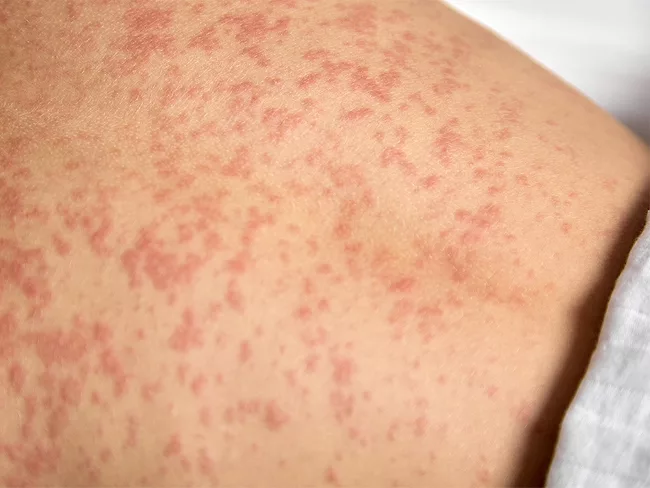
Invivyd Inc. has announced the discovery and advancement of VMS-063, a novel monoclonal antibody candidate for the treatment and prevention of measles.

 RSS
RSS