One of the major obstacles to treating neurological disorders such as Alzheimer’s disease is the blood-brain barrier: drugs that are injected into the circulation usually do not enter the brain effectively. Researchers at Denali Therapeutics Inc., Biogen Inc. and the University of Minnesota have devised a vehicle for transporting antibodies against amyloid-β that can bypass the blood-brain barrier by binding to the transferrin receptor, which is expressed much more abundantly in capillaries than in arteries.
Quantumpharm Inc., known as Xtalpi Inc., announced receiving $51 million up front from a potential $5.99 billion deal with Dovetree LLC on Aug. 6. The collaboration, first inked through a letter of intent between the two parties on June 23, will combine Shenzhen, China-based Xtalpi’s AI-based and robotics-driven discovery platform with Dovetree’s “biological insights.” The goal will be to select and validate potential first-in-class candidates for Dovetree across five areas of oncology, immunology and inflammatory diseases, neurological disorders and metabolic dysregulation.
Neucore Bio Inc. announced it has been awarded a US$304,000 National Science Foundation Small Business Technology Transfer grant to evaluate scalable manufacturing of exosome-based gene delivery methods.
Deep learning tools for protein design can also be used to create molecules that bind to them. Certain peptides, such as intrinsically disordered proteins (IDPs), are challenging to target due to their variable nature. However, scientists from the lab of Nobel laureate David Baker have developed a method to generate binders for IDPs by searching the world’s largest protein database with their AI-powered tool RFdiffusion.
An experimental gene therapy based on the prime editing technique could become an effective treatment for alternating hemiplegia of childhood, a severe and currently incurable rare disease. David Liu’s lab at the Broad Institute, the inventor of this gene edition methodology, together with scientists from The Jackson Laboratory, successfully reversed the effects of five mutations associated with this disorder in a mouse model.
Gate Bioscience Inc. has entered a collaboration and license agreement with Eli Lilly and Co. to discover, develop and commercialize molecular gate therapeutics. The collaboration will leverage Gate’s molecular gate drug discovery engine to identify molecular gates capable of eliminating specific difficult-to-drug proteins.
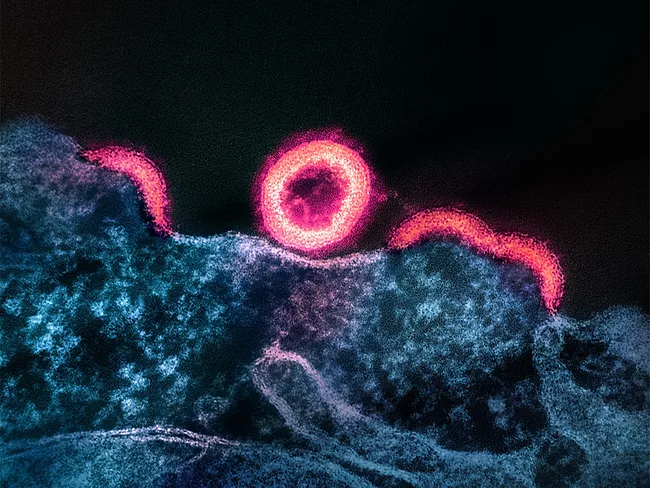
There is still no effective vaccine or cure for HIV. Scientists are considering options ranging from longer-term antiretroviral therapy (ART) that space out injections by several years to long-lasting pre-exposure prophylaxis (PrEP) that acts as a vaccine while immunization is achieved. What else can be done? The “Innovations in HIV virology: Translating discoveries into novel therapies” symposium in basic science at the 13th IAS Conference on HIV Science (IAS 2025), which took place from July 13 to 17, 2025, in Kigali, Rwanda, showcased some of the new ideas that the scientific community are developing.
While people living with HIV can lead virtually normal lives thanks to antiretroviral therapy (ART), HIV persists in a latent state within cellular reservoirs that scientists do not know how to eliminate. “Transcription is a critical step in the viral life cycle. … But there are currently no drugs suppressing HIV transcription, and that may be one of the reasons why current antiretroviral therapy is not curative,” Melanie Ott told the audience at the 13th IAS Conference on HIV Science this week in Kigali, Rwanda.
Aussie researchers have used CRISPR gene editing tools to “armor” chimeric antigen receptor (CAR) T cells to activate additional cancer-fighting proteins at the tumor site, enabling them to target cancer cells in solid tumors.
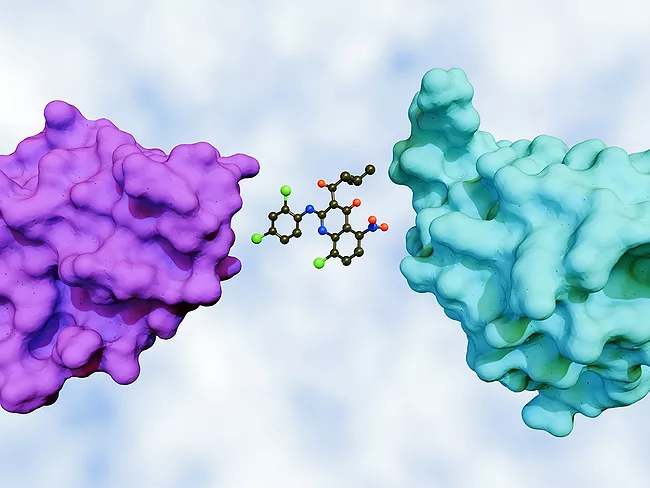
Degradation is a therapeutic strategy that could offer possibilities to get at currently undruggable target proteins. In targeted degradation, compounds induce interactions between a target protein and a protein that can tag the target for degradation. In principle, there are several pathways that could be used for such tagging; the most attention has gone to ubiquitin ligases, in particular cereblon, a protein that is part of a ubiquitin ligase complex and the target of several approved drugs.