Scientists at the University of California San Francisco (UCSF) have designed a group of synthetic molecules that could prevent the rejection of allogeneic cell transplants. Their strategy consisted of activating the immune checkpoints of different populations of immune cells from the cell surface, but avoiding the cytotoxicity of natural killer (NK) cells and macrophages that would destroy the transplanted cells.
Ibio Inc. has expanded its artificial intelligence (AI)-powered technology offering with the launch of Shieldtx, an antibody masking technology designed to enable specific, highly targeted antibody delivery to diseased tissue without harming healthy tissue.
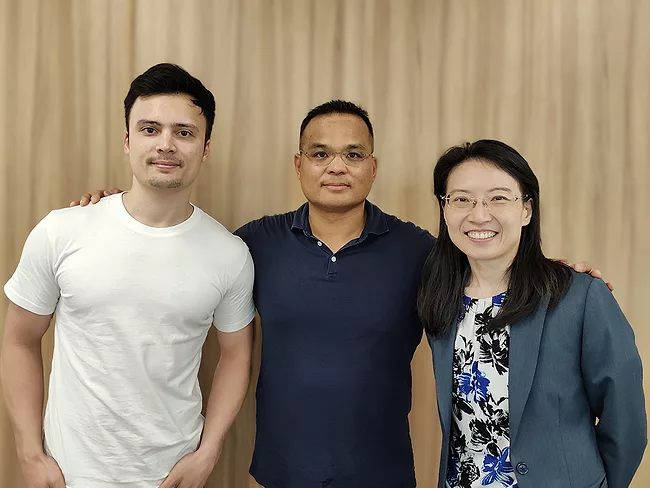
Fledgling biotechnology company Automera has launched in Singapore with $16 million in series A funding to develop its autophagy-targeting chimera small molecules (AUTACs) platform technology. Automera co-founder and chief technology officer Loong Wang told BioWorld that he and his business partner, Taiyang Zhang, decided to move into the biotechnology space in 2021.
Can-Fite Biopharma Ltd. has entered into an agreement with Collaborations Pharmaceuticals Inc. (CPI) to develop anticancer drugs utilizing artificial intelligence (AI) and machine learning (ML) techniques.
At the 30th Annual Congress of the European Society for Gene and Cell Therapy in Brussels this week, researchers presented both preclinical and clinical strategies for applying gene therapy to a functional HIV cure. At a Wednesday session on Infectious Diseases & Vaccines, Alessio Nahmad, of Tabby Therapeutics Ltd., described using B cells edited to express broadly neutralizing antibodies (bnAbs) 3BNC117 to deliver high titers of antibodies in mice.
Artificial intelligence (AI) is in full development, and advances are already used in many fields, including medicine. In oncology, these tools can identify a tumor in an image with 99% accuracy. But they can also miss it if the algorithm was not developed with the right data or the correct decisions. The 2023 European Society for Medical Oncology (ESMO) Congress brought together in Madrid doctors and deep learning experts to discuss the challenges and advances of AI in this area. And what’s better than asking an AI what its trainer has told it about AI?
Some cancers with a poor prognosis have had no new treatments in decades. Advances in the genetic characterization of these tumors now offer a range of possibilities for the development of new therapies that could completely change the quality of life and survival of these patients.
Generation Bio Co. has announced a breakthrough in its nonviral genetic medicine platform with the development of a proprietary, novel DNA called immune-quiet DNA (iqDNA).
The mRNA technology used in vaccines against viral infections could also be developed for cancer therapies. A group of scientists has designed a circular RNA (circRNA) encapsulated in lipid nanoparticles (LNPs) that acts in the mitochondria of tumor cells through the protein gasdermin-D (GSDMD) and reduces adenocarcinoma. The work was published on Oct. 16, 2023, in Nature Cancer.
Salipro Biotech AB and Icosagen AS have entered into a multitarget antibody research agreement for the discovery and characterization of monoclonal antibodies against several challenging membrane proteins.
 RSS
RSS