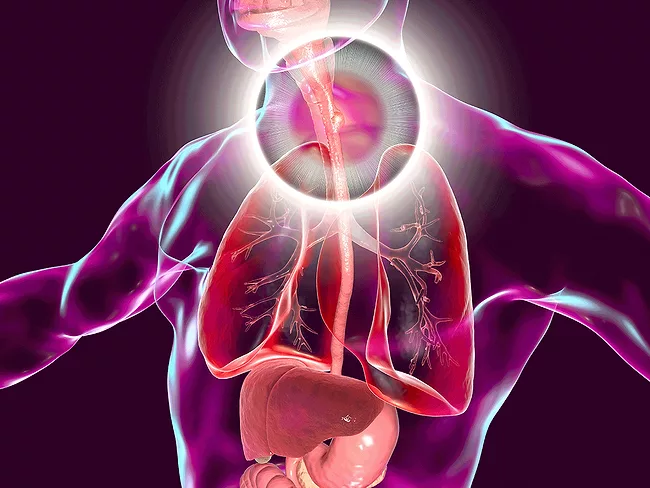
Cystic fibrosis is a life-threatening disease predominantly with respiratory symptoms. Most of the subjects with the disease harbor the F508del variant in the CFTR gene that causes the protein to misfold and be prematurely degraded. Despite approved drugs that restore the CFTR protein, the maximal lung function improvement is approximately 14%.
Researchers from Zhengzhou University and affiliated organizations published data from a study that aimed to assess the expression levels of histone modifier enzymes in esophageal squamous cell carcinoma (ESCC).
Researchers from Zhengzhou University and affiliated organizations published data from a study that aimed to assess the expression levels of histone modifier enzymes in esophageal squamous cell carcinoma (ESCC).
Researchers in from Nanjing Drum Tower Hospital have presented data from a study that investigated the role of immunoglobulin superfamily member 6 (IGSF6) microglia during ischemic stroke.
Researchers from Tango Therapeutics Inc. have unveiled DNA ligase 1 (LIG1) as a potential new therapeutic target for synthetic lethality in BRCA1-mutant cancers after CRISPR/Cas9 screening.
Previous research has shown that cell division cycle associated 4 (CDCA4) is overexpressed in multiple tumors and is involved in tumor progression. Researchers from Yangtze University and affiliated organizations investigated the role of CDCA4 in bladder cancer.
Microglia play a crucial role in neuroinflammation after ischemic brain injury. Previous data have shown that leukocyte immunoglobulin-like receptor B4 (LILRB4) was upregulated in mice after middle cerebral artery occlusion (MCAO), but the role it plays here is not well understood. The role LILRB4 plays in ischemic brain injury was thus investigated. LILRB4 expression was measured in mice at different time points after MCAO.
Fanconi anemia (FA) is a rare genetic disorder characterized by defective DNA repair, leading to hematopoietic stem cell (HSC) dysfunction and bone marrow failure. Replication stress, which compromises HSC maintenance and regeneration, is one of the central underlying mechanisms in FA.
Researchers from Huazhong University of Science and Technology have described the potential use of RBM47 as a therapeutic target for thyroid-associated ophthalmopathy, an autoimmune disorder characterized by proptosis, lid swelling, diplopia and compressive optic neuropathy.
Tumor immune evasion mechanisms could be reversed by activating intracellular antiviral immune responses. It has been reported that the use of DNA methyltransferase (DNMT) inhibitors combined with poly(ADP ribose) polymerase (PARP) inhibitors activated stimulator of interferon genes (STING) signaling pathway in a process named pathogen mimicry response.