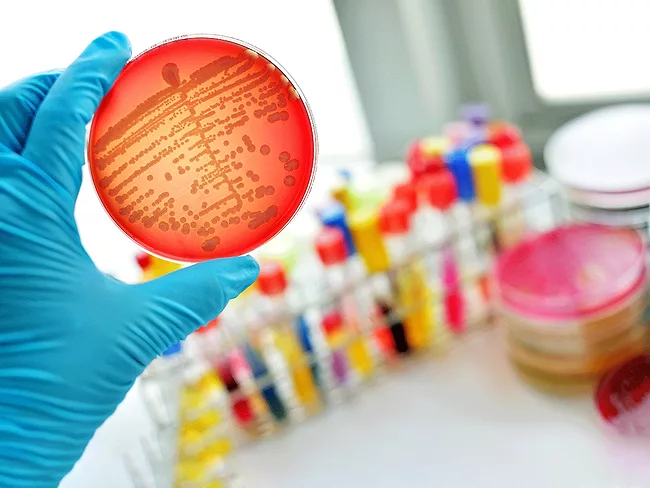
HONG KONG – Researchers from the Massachusetts Institute of Technology’s (MIT) research enterprise in Singapore have found a way to not just reverse antibiotic resistance but also increase sensitivity in some bacteria, using hydrogen sulfide.
HONG KONG Researchers from the Massachusetts Institute of Technology’s (MIT) research enterprise in Singapore, known as Singapore-MIT Alliance for Research and Technology (SMART), have found a way to not just reverse antibiotic resistance but also increase sensitivity in some bacteria, using hydrogen sulfide.
LONDON – Twenty-three pharma companies are joining forces in the AMR Action Fund and have raised $1 billion in new money for the clinical development of antibiotic drugs.
LONDON – Twenty-three pharma companies are joining forces in the AMR Action Fund and have raised $1 billion in new money for the clinical development of antibiotic drugs addressing the most resistant bacteria. Working with philanthropic backers, the fund aims to bring two to four new antibiotics through to approval by 2030.
Targeted therapy offers an opportunity for personalized medicine that's specific for a patient's tumor, but the hyper-focused treatment creates possibilities for cells to mutate and become resistant to the therapy.
As organisms adapt to their environment, adaptations that serve them in their current environment can become liabilities if that environment changes. The control of traits that are an asset in one situation and a liability by the same gene is called antagonistic pleiotropy. In the March 16, 2020, online issue of Nature Genetics, researchers reported a method to systematically identify mutations that conferred antagonistic pleiotropy – in the form of resistance to one drug, but heightened sensitivity to another – in acute myeloid leukemia (AML) cells.
BEIJING – While repurposing drugs may be a quick solution to an epidemic like COVID-19 that has a limited research window, it’s just luck as to whether an already available drug candidate exists for newly emergent diseases. Experts say it’s more realistic to develop better drugs instead of attempting to repurpose old ones.
BEIJING – While repurposing drugs may be a quick solution to an epidemic like COVID-19 that has a limited research window, it’s just luck as to whether an already available drug candidate exists for newly emergent diseases. Experts say it’s more realistic to develop better drugs instead of attempting to repurpose old ones.
A new web-based tool allowing rapid in silico prediction of the ability of candidate antibiotics to accumulate in Gram-negative bacteria should enable subsequent prioritization of new compounds for synthesis and further evaluation, U.S. researchers reported Nov. 18, 2019, in Nature Microbiology.
LONDON – Pfizer Inc. is taking further steps to distinguish its third-generation anaplastic lymphoma kinase (ALK) inhibitor, Lorbrena, from the rest of the field, funding a pan-European trial that will use liquid biopsies to track the resistance profile of non-small-cell lung cancers (NSCLC).
 RSS
RSS