SEATTLE – Tracing the family tree of COVID-19 through its evolving DNA sequence makes it possible to disprove many false claims circulating on social media about the novel coronavirus, and, in particular, that it was generated in a covert biological weapons program. “From everything I’ve looked at, there is zero evidence for genetic engineering; it looks like normal evolution,” said Trevor Bedford, a computational biologist at Fred Hutchinson Cancer Research Center, who has been using genomes sequences taken from patient samples to track the spread of the virus since Jan. 11.
SANTA CLARA, Calif. – Diabetes seems likely to be the first area to really show concrete products and results for the ambitious Verily Life Sciences, which is the med-tech business of Mountain View, Calif.-based Google parent Alphabet Inc. However, its two major diabetes partners both have been rethinking the relationship.
DUBLIN – “Welcome to the conversation,” Abbvie Inc.’s head of genomic research, Howard Jacob, an early pioneer of genomics-driven medicine, told delegates during a keynote address at the Genomics Summit 2020 event Jan. 23. Ireland is very much a latecomer to that conversation and it has yet, as a country, to figure out what the shape of its contribution to the genomic era of medicine is going to be.
SANTA CLARA, Calif. – Just as it does with treatments, the National Comprehensive Cancer Network (NCCN) offers detailed guidelines on genomic testing by cancer type. These are key in determining what physicians can prescribe routinely and what insurers will cover. But those guidelines aren’t followed regularly outside a major research hospital setting, thereby obviating access to tumor genetic information that could help to better guide treatment. Even if current guidelines are followed, physicians and patients can get information back from the tests that neither party is prepared to process.
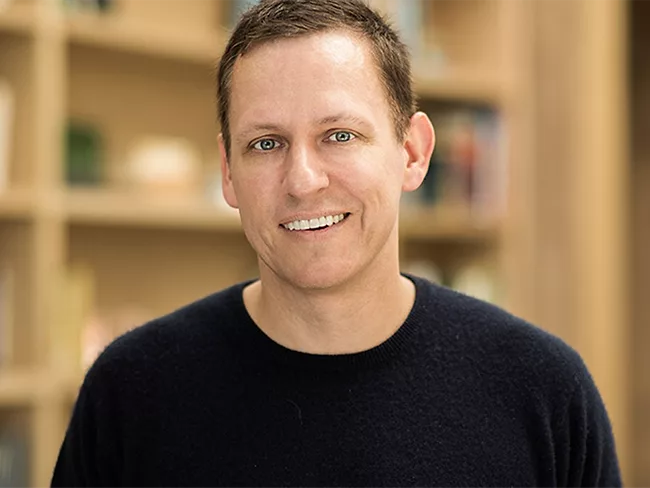
SANTA CLARA, Calif. – Peter Thiel is not a fan of incremental science. The high-profile venture capital investor, who invests across technology and the life sciences via various vehicles, including the Founders Fund, suggested that as academic and government bureaucracies have scaled up and rigidified over the last 50 or 60 years, that has eroded the ability of researchers to pursue innovative science.
SAN FRANCISCO – There's no time like now to think about the potential political changes, opportunities and challenges down the road for industry, Hogan Lovells partner Ivan Zapien told luncheon attendees during this year's Biotech Showcase.
SAN DIEGO – Allele-specific KRAS inhibitors are “the most exciting change coming down the pike for treating KRAS-mutant tumors in the near future,” Ferdinandos Skoulidis said at the sixth joint conference by the American Association for Cancer Research and the International Association for the Study of Lung Cancer meeting.
SAN FRANCISCO – Atop the stage where, just a year ago, he'd detailed the then-new $74 billion acquisition of Celgene Corp, Bristol-Myers Squibb Co. CEO Giovanni Caforio told attendees of this year's J.P. Morgan Healthcare Conference he intends to plunge ahead with "the agility and speed of a biotech company."
SAN FRANCISCO – Pacing the stage at this year's China Showcase Saturday, Chinabio CEO Greg Scott sounded a touch disappointed. Last year lacked the kind of record-breaking stats he likes to punctuate with iconic explosions, a common image in his widely valued China health care talks. "Simply stated, business is continuing as normal," he said.
ORLANDO, Fla. – The world’s biggest and certainly most lavish hematology gathering, the 61st American Society of Hematology conference, just ended in Orlando, having brought 30,024 people from 25 countries to glory in Florida sunshine, if they got outside, but mostly to bask in the discipline’s most up-to-the-minute data. The amount of research was staggering, with 5,978 abstracts available for review. Key themes included work aimed at overcoming obstacles to CAR T therapy, new progress in preventing and treating venous thromboembolism, moves to address health care disparities and new developments in the care of sickle cell diseases. Late-breakers highlighted new data on Blincyto (blinatumomab, Amgen Inc.), Sanofi SA's sutimlimab, azacitidine and Darzalex (daratumumab, Janssen Biotech Inc.).

 RSS
RSS