Akari Therapeutics plc has established a strategic research collaboration with Whitehawk Therapeutics Inc. to conduct preclinical studies evaluating Akari’s proprietary PH1 spliceosome-modulating payload technology in combination with Whitehawk’s topoisomerase I inhibitor antibody-drug conjugate platform.
Researchers at Washington University in St. Louis have used click chemistry to link a second antibody to a pre-existing antibody-drug conjugate (ADC) in vivo. In preclinical models of HER2 and EGFR co-expressing pancreatic, breast and gastric tumors, sequential administration of the ADC and the second antibody was better at shrinking tumors than either ADC monotherapy or a combination of antibody and ADC treatment.
Eioncell Co. Ltd. and Hallym University have reported new antibody-drug conjugates (ADCs) comprising an antibody targeting kita-kyushu lung cancer antigen 1 (KK-LC-1; CT83) linked to a cytotoxic drug potentially useful for the treatment of cancer.
Shanghai Henlius Biologics Co. Ltd., Shanghai Henlius Biopharmaceutical Co. Ltd. and Shanghai Henlius Biotech Inc. have disclosed new antibody-drug conjugates comprising a monoclonal antibody targeting HER2 covalently linked to a camptothecin derivative potentially useful for the treatment of cancer.
Rybodyn Inc. has been awarded $1.3 million from the U.S. Department of War to advance preclinical development of two novel antibody-based therapies for lung cancer.
A Beijing Mabworks Biotech Co. Ltd. patent describes new antibody-drug conjugates (ADCs) comprising antigen-binding fragments or antibodies targeting delta-like protein 3 (DLL3) linked to a cytotoxic drug potentially useful for the treatment of small-cell lung cancer (SCLC).
Novartis AG is to pay $1.1 billion up front to acquire Myricx Bio Ltd., a preclinical-stage antibody-drug conjugate (ADC) specialist that is advancing a novel and more potent class of payload. With the first two programs due to enter clinical development before the end of the year, the Swiss pharma also will pay up to $400 million more in potential milestones. The centerpiece of the deal is London-based Myricx’s N-myristoyltransferase inhibitors, which in preclinical testing have prompted complete and durable tumor regression at well-tolerated doses in a range of solid tumors.
Separate research teams have reported new insights into resistance mechanisms to the antibody-drug conjugate (ADC) Padcev (enfortumab vedotin, Astellas Pharma Inc./Pfizer Inc.), and possibly to ADCs more broadly. Urothelial cancer drug Padcev, which targets the cell adhesion molecule Nectin-4, was approved in 2019 and is currently one of Pfizer’s top 10 medicines and vaccines, generating $1.94 billion in 2025.
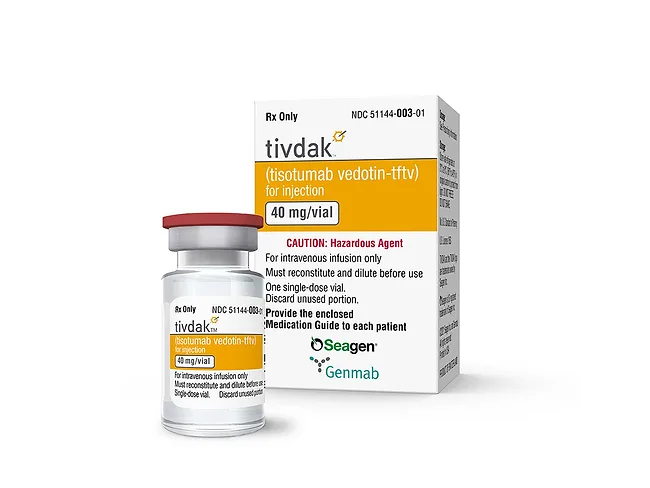
The April 2024 full U.S. FDA approval of Pfizer Inc. and Genmab A/S’ tissue factor-targeting antibody-drug conjugate Tivdak (tisotumab vedotin) for cervical cancer sparked interest from drug developers in the strategy, which has been known about for a while.
Novartis AG is to pay $1.1 billion up front to acquire Myricx Bio Ltd., a preclinical-stage antibody-drug conjugate (ADC) specialist that is advancing a novel and more potent class of payload. With the first two programs due to enter clinical development before the end of the year, the Swiss pharma also will pay up to $400 million more in potential milestones. The centerpiece of the deal is London-based Myricx’s N-myristoyltransferase inhibitors, which in preclinical testing have prompted complete and durable tumor regression at well-tolerated doses in a range of solid tumors.
 RSS
RSS