Investors in Dianthus Therapeutics Inc. apparently chose to ignore subtleties in the difference between efforts with that firm’s claseprubart vs. those by competitor Sanofi SA, which said that the phase III Mobilize study testing riliprubart in chronic inflammatory demyelinating polyneuropathy (CIDP) will be stopped for futility.
After a major breach of trust when its data were advertised for sale in China, the UK Biobank will now attempt to recall data previously downloaded by legitimate researchers and seek assurances information has been deleted from local servers.
Extracellular matrix specialist Engitix Ltd. is teaming up with GSK plc to delve into the mechanisms underlying regression of fibrosis after treatment for chronic liver disease, and identify and validate new drug targets involved in this process.
Building on its partnerships with Gilead Sciences Inc., Sanofi SA and Pfizer Inc., Nurix Therapeutics Inc. brought on Roche Holding AG to help develop bexobrutideg, an oral degrader of Bruton’s tyrosine kinase (BTK). “I really can’t think of a better partner to maximize the opportunity for bexobrutideg to a wide range of patients,” Jason Kantor, Nurix’s chief business officer, told investors on a conference call, later pointing out that Roche has multiple drugs targeting B cells.
After a major breach of trust when its data were advertised for sale in China, the UK Biobank will now attempt to recall data previously downloaded by legitimate researchers and seek assurances information has been deleted from local servers.
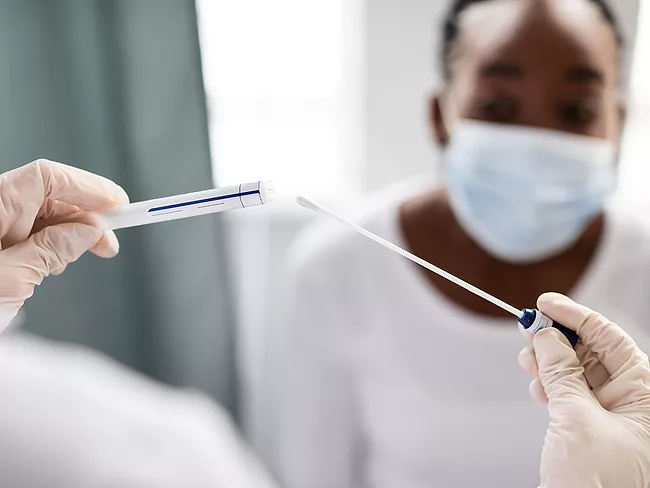
Roche Holding AG has rapidly developed a research-use only molecular PCR test to detect the rare Ebola Bundibugyo virus, to support response efforts amid the ongoing outbreak in the Democratic Republic of Congo and Uganda. The test comes as commentary in The Lancet this week underscored the urgent need for a fit-for-purpose diagnostic test, as it warned that the absence of reliable testing is hampering efforts to ascertain the scale of the epidemic and understand the transmissibility of this strain of Bundibugyo virus.
Antibody-drug conjugate (ADC) specialist Ona Therapeutics SL has closed an oversubscribed series B at $86.6 million, as clinical development of the lead program ONA-255 in advanced treatment-resistant breast cancer gathers steam.
IMU Biosciences Ltd. has closed its series A at £40 million (US$53.9 million), adding £28.5 million to the initial close in January 2024, and bringing the total raised since the company’s formation in 2021 to £45 million. Since that first close, IMU has built what is claimed as the world’s largest high-definition immune system dataset, with almost 25,000 profiles of healthy volunteers and disease-specific patient cohorts.
IMU Biosciences Ltd. has closed its series A at £40 million (US$53.9 million), adding £28.5 million to the initial close in January 2024, and bringing the total raised since the company’s formation in 2021 to £45 million. Since that first close, IMU has built what is claimed as the world’s largest high-definition immune system dataset, with almost 25,000 profiles of healthy volunteers and disease-specific patient cohorts.
Although analysts liked the data – calling them “truly amazing” and “transformational” – Wall Street apparently had qualms about three cancer cases that turned up in phase III top-line data from the Abtect maintenance trial with obefazimod. Paris-based Abivax SA’s oral, first-in-class miRNA-124 enhancer performed well in adults with moderately to severely active ulcerative colitis (UC), but shares of (NASDAQ:ABVX) closed June 2 at $72.50, down 44%, or $57.19.
 RSS
RSS