Regulatory snapshots, including global submissions and approvals, clinical trial approvals and other regulatory decisions and designations: Capsovision, Orbusneich, Surmodics, Urotronic.
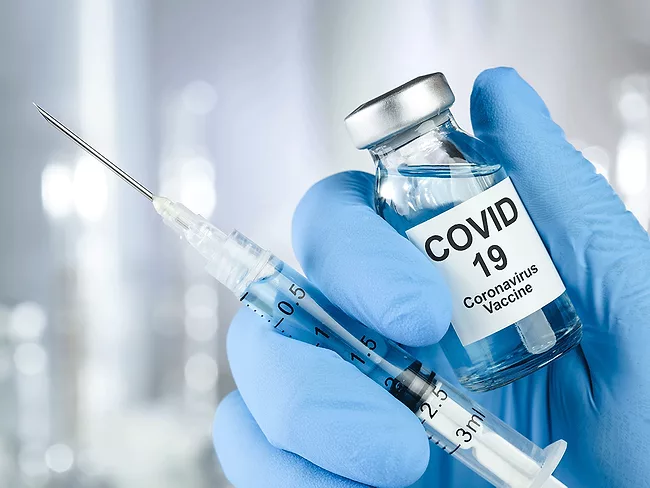
Before authorizing or licensing any COVID-19 vaccine, the U.S. FDA will hold a public advisory committee meeting on that vaccine, FDA Commissioner Stephen Hahn said at a Sept. 23 hearing before the Senate Health, Education, Labor and Pensions Committee.
The U.S. FDA has posted another draft version of the intended use rule, this time with a fix for the so-called knowledge problem. This latest draft would eliminate mere knowledge of off-label use as a trigger for amendments to the product label, a provision the agency said in a Sept. 22 statement will “provide greater certainty and predictability for regulated parties.”
According to the Swiss association for medical technology companies, Swiss Medtech, introducing the new European regulations for medical devices (MDR) and in vitro diagnostics (IVDR) is going to have serious consequences for the sector in Switzerland. This Swiss trade association has just published its biannual survey as part of the 2020 sector study on the Swiss medical technology industry (SMTI).
The latest global regulatory news, changes and updates affecting medical devices and technologies, including: Ambulatory Surgical Center Association, Dyansys, Neurosurgical Care.
The latest global regulatory news, changes and updates affecting medical devices and technologies, including: Life Spine, Medhub, Medtronic, Nanovibronix, Radlogics, Rti Surgical.
While the ultimate goal is increased diversity in clinical trials so as to improve health equity, a great start is making diversity a priority and a part of the research plan, Luther Clark, deputy chief patient officer at Merck & Co. Inc., said during an FDA Office of Minority Health and Health Equity webinar Sept. 22.
TORONTO – Ka Imaging Inc. has received U.S. FDA 510(k) clearance for a portable, dual-energy X-ray detector that distinguishes itself from others in this class by delivering regular digital radiography, bone and tissue images in a single X-ray exposure. Designed for early detection of pneumonia, including COVID-19, the Reveal detection system also differentiates bone and soft-tissue.
The field of artificial intelligence (AI) is stretching the boundaries of conventional med-tech regulation, and several regulatory agencies are working to cut that Gordian knot. Marc Lamoureaux, director of digital health at Health Canada’s (HC) medical device directorate, said on a Sept. 21 webinar that legislation passed in 2019 gives the agency a “regulatory sandbox” in which to experiment with AI regulation, a mechanism he said may bring these algorithms to market much more rapidly than would otherwise be the case.
Visby Medical Inc. emerged from stealth mode to secure emergency use authorization (EUA) from the U.S. FDA for its Personal PCR device for detection of COVID-19 infections. It is the first FDA-authorized portable device to use the polymerase chain reaction technology for COVID-19 testing. The San Jose, Calif.-based company was known as Click Diagnostics Inc. until March 2020.

 RSS
RSS