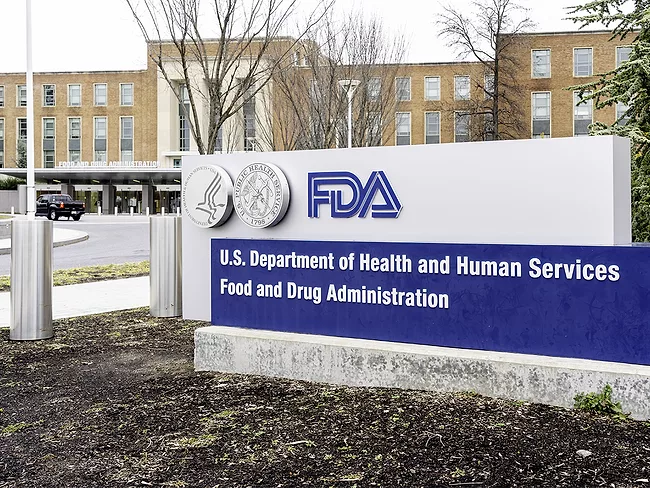
Before authorizing or licensing any COVID-19 vaccine, the U.S. FDA will hold a public advisory committee meeting on that vaccine, FDA Commissioner Stephen Hahn said at a Sept. 23 hearing before the Senate Health, Education, Labor and Pensions Committee.
The U.S. FDA has posted another draft version of the intended use rule, this time with a fix for the so-called knowledge problem. This latest draft would eliminate mere knowledge of off-label use as a trigger for amendments to the product label, a provision the agency said in a Sept. 22 statement will “provide greater certainty and predictability for regulated parties.”
While the ultimate goal is increased diversity in clinical trials so as to improve health equity, a great start is making diversity a priority and a part of the research plan, Luther Clark, deputy chief patient officer at Merck & Co. Inc., said during an FDA Office of Minority Health and Health Equity webinar Sept. 22.
TORONTO – Ka Imaging Inc. has received U.S. FDA 510(k) clearance for a portable, dual-energy X-ray detector that distinguishes itself from others in this class by delivering regular digital radiography, bone and tissue images in a single X-ray exposure. Designed for early detection of pneumonia, including COVID-19, the Reveal detection system also differentiates bone and soft-tissue.
The field of artificial intelligence (AI) is stretching the boundaries of conventional med-tech regulation, and several regulatory agencies are working to cut that Gordian knot. Marc Lamoureaux, director of digital health at Health Canada’s (HC) medical device directorate, said on a Sept. 21 webinar that legislation passed in 2019 gives the agency a “regulatory sandbox” in which to experiment with AI regulation, a mechanism he said may bring these algorithms to market much more rapidly than would otherwise be the case.
Visby Medical Inc. emerged from stealth mode to secure emergency use authorization (EUA) from the U.S. FDA for its Personal PCR device for detection of COVID-19 infections. It is the first FDA-authorized portable device to use the polymerase chain reaction technology for COVID-19 testing. The San Jose, Calif.-based company was known as Click Diagnostics Inc. until March 2020.
The diagnostic industry in the U.S. and elsewhere has scrambled to keep up with the COVID-19 pandemic, and one of the key developments will be a test that can be used at home without medical supervision. However, Tim Stenzel, director of the U.S. FDA’s Office of In Vitro Diagnostics and Radiological Health, said on the Sept. 16 diagnostic town hall that the agency is keen on authorizing such a test, but has yet to receive any emergency use authorization filings. “We want to see a home test submission, and we’re willing to be very flexible here,” Stenzel said.
The FDA has granted Plus Therapeutics Inc. fast track designation for its lead candidate, Rhenium Nanoliposomes (RNL), for treating recurrent glioblastoma, propelling it into the sixth cohort of a phase I dose-finding trial.
B-Temia Inc.’s Keeogo mobility device is on the move in the U.S. now that it has received 510(k) clearance from the U.S. FDA. Unlike currently available exoskeletons that move for patients, the Keeogo (keep on going) Dermoskeleton system amplifies signals from patients who can initiate movement but need additional assistance.
Avinger Inc. has received U.S. FDA clearance for a its Ocelaris next-generation, image-guided chronic total occlusion (CTO) crossing system for patients with peripheral artery disease (PAD). The catheter-based system, which will be sold under the brand name Tigereye, provides real-time imaging from within the vessel during a CTO-crossing procedure. It will be available on a limited basis beginning later this year.