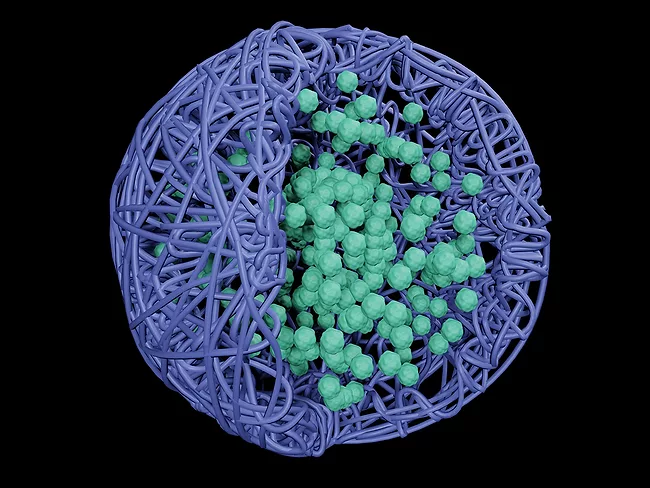
The traps that neutrophils develop against microorganisms also hold T cells and prevent the success of immunotherapy in pancreatic cancer. To free the immune system from itself, scientists at the Istituto Oncologico Veneto in Italy made a key that unlocked this sticky dungeon from an antibody against arginase-1 (ARG1), an enzyme also present in the trap.
Human trophoblastic cell surface antigen 2 (Trop2) is upregulated in cancers compared to normal tissues. Researchers from the University of Texas MD Anderson Cancer Center recently aimed to assess the clinical significance of Trop2 in small bowel adenocarcinoma (SBA).
Bladder small-cell carcinoma can be divided into different subtypes depending on the expression of neuroendocrine (NE) markers such as POU2F3, NEUROD1 and ASCL1. Single-cell RNA sequencing previously found a distinct subpopulation with high expression of 1-phosphatidylinositol 4,5-bisphosphate phosphodiesterase gamma-2 (PLCG2) with pro-metastatic features and poor prognosis. The aim of a newer study was to evaluate the expression of PLCG2 in bladder NE tumors and correlate it with prognostic utility.
Enveric Biosciences Inc. has announced new research detailing the first-ever isolation of a novel indolethylamine N-methyltransferase from the cane toad (Rhinella marina) and the successful development of a bioproduction platform for the isolation and pharmacological screening of novel indolethylamines.
Redx Pharma plc has described henyl- and pyridopyrazole derivatives as discoidin domain-containing receptor DDR1 and/or DDR2 inhibitors. They are reported to be useful for the treatment of fibrosis, cancer, transplant rejection, inflammatory, renal, liver and cardiovascular disorders.
 RSS
RSS