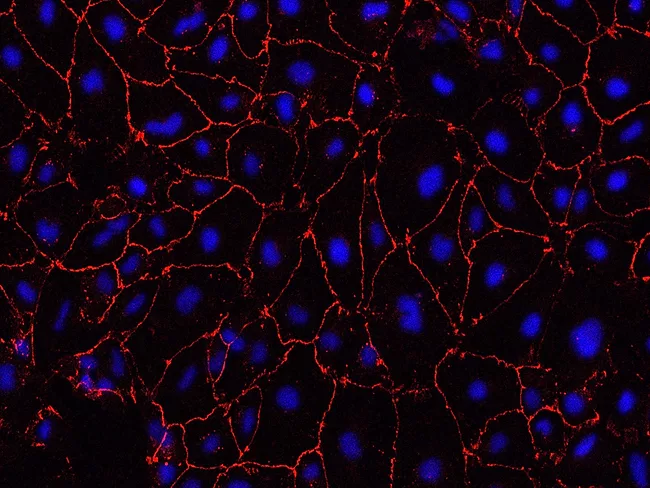
The generation of in vitro small blood vessels mimicking the alterations of cerebral small vessel disease (CSVD) allowed a British research group to identify a way to seal leaks to treat conditions such as stroke or vascular dementia. The inhibition of matrix metalloproteinases (MMPs), enzymes that participate in the formation of new vessels, restored the normal union of the cells, preventing the permeability of the system.
Additional early-stage research and drug discovery news in brief, from: Athira Pharma, Chroma Medicine, Cognition Therapeutics, Geovax Labs, Longhorn Vaccines and Diagnostics LLC, Omega Therapeutics.
Researchers from Aligos Therapeutics Inc. have presented the discovery and preclinical evaluation of a novel next-generation liver targeted PD-L1 small molecule inhibitor, ALG-094103, which is being developed for the treatment of chronic hepatitis B and liver cancer.
Virginia Commonwealth University has divulged NLRP3 inflammasome inhibitors reported to be useful for the treatment of traumatic brain injury, myocardial infarction, arthritis, diabetes, gout, COVID-19, Alzheimer’s and Parkinson’s disease, among others.
Blueprint Medicines Corp. has identified KIT (c-KIT) (mutant) inhibitors reported to be useful for the treatment of gastrointestinal stromal tumors (GIST).
Kumquat Biosciences Inc. has synthesized son of sevenless homolog 1 (SOS1)/GTPase KRAS interaction inhibitors reported to be useful for the treatment of cancer.
Proxygen GmbH has disclosed molecular glue degraders comprising a cullin-ring E3 ligase (CRL) binding moiety acting as cyclin-dependent kinase 12 (CDK12)/cyclin K degradation inducers. They are reported to be useful for the treatment of metabolic diseases, cancer, infections and more.
Trex Bio Inc. has announced its selection of a new development candidate, TRB-061, designed to selectively agonize TNF receptor 2 (TNFR2), a mechanism with potential across a broad range of autoimmune indications.
It’s known that interferon-alpha (IFNα) activates interferon-stimulated genes (ISGs) and disrupts the hepatitis B virus (HBV) replication cycle. Pegylated (PEG)-IFNα has been widely used for its immunomodulatory and antiviral properties but it is not always well tolerated and thus its use is limited.
 RSS
RSS