BioWorld. Link to homepage.

Clarivate
  • BioWorld
  • BioWorld Science
  • BioWorld Asia
  • Data Snapshots
    • Biopharma
    • Medical technology
    • Infographics: Dynamic digital data analysis
    • Index insights
    • NME Digest
  • Special reports
    • Infographics: Dynamic digital data analysis
    • Trump administration impacts
    • Med-tech outlook 2026
    • Under threat: mRNA vaccine research
    • BioWorld at 35
    • Biopharma M&A scorecard
    • Bioworld 2025 review
    • BioWorld MedTech 2025 review
    • BioWorld Science 2025 review
    • Women's health
    • China's GLP-1 landscape
    • PFA re-energizes afib market
    • China CAR T
    • Alzheimer's disease
    • Coronavirus
    • More reports can be found here

BioWorld. Link to homepage.

  • Sign In
  • Sign Out
  • My Account
Subscribe
BioWorld - Saturday, April 18, 2026
Breaking News: Best of BioWorld: Q1Breaking News: Best of BioWorld: Q1
Home » Topics » BioWorld Asia, Science

BioWorld Asia, Science
BioWorld Asia, Science RSS Feed RSS

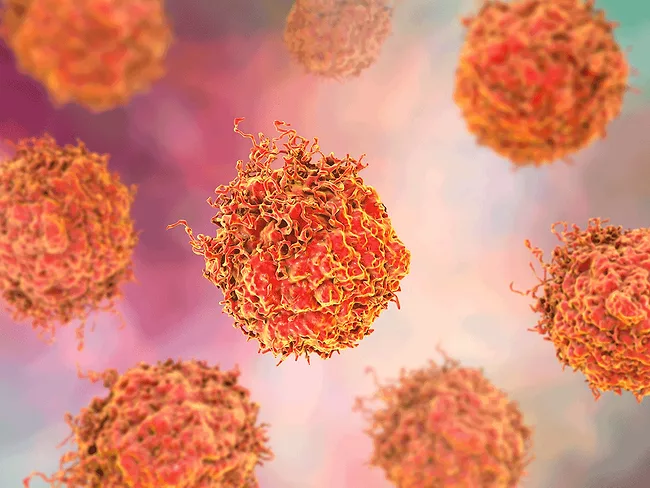
Prostate cancer cells

Prostate cancers illustrate equity’s prerequisites at ASCO 2021

June 15, 2021
By Anette Breindl
At the 2021 virtual annual meeting of the American Society for Clinical Oncology (ASCO), results of the VISION trial testing the addition of Novartis AG’s radiopharmaceutical Lutetium-177-PSMA-617 (Lutetium-PSMA) to individualized standard-of-care regimens in metastatic castration-resistant prostate cancer improved both overall survival and radiographic progression-free survival.
Read More
Coronavirus, question marks
Origin stories

SARS-CoV-2 origin is hotly debated known unknown

May 18, 2021
By Anette Breindl
Roughly a year and a half after the start of the COVID-19 pandemic, many unknowns remain about the future of the virus. How it will mutate, how long protection from either illness or vaccination will last, when it will cease to be a pandemic and instead be endemic, even whether the worst is still ahead. And there is also an increasing acknowledgment that there remain unknowns about SARS-CoV-2’s past.
Read More
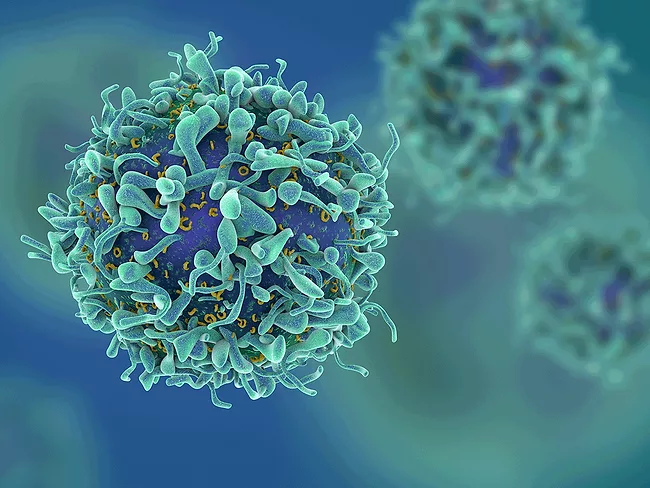
T cells

Adrenaline release immobilizes immune cell responses

May 4, 2021
By Subhasree Nag
Using advanced intravital microscopy to visualize immune cell movement within the tissues, investigators at the Peter Doherty Institute for Infection and Immunity, Melbourne have discovered that noradrenaline causes a dramatic paralysis of immune cell movement.
Read More
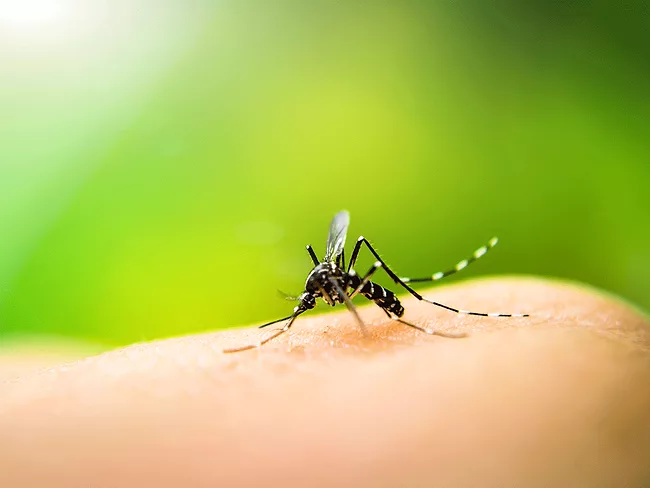
Mosquito

Collaboration promotes new antimalarial drug development

April 27, 2021
By John Fox
A collaboration aimed at identifying and developing potential new antimalarial drug candidate drugs has been announced between Walter and Eliza Hall Institute for Medical Research in Melbourne, Australia, and Janssen Pharmaceutica, with assistance from Johnson & Johnson Innovation.
Read More
In virtro fertilization

Induced blastocysts are model for earliest development stages

March 23, 2021
By Nuala Moran
LONDON – The alchemy of induced pluripotent cells has broken another barrier, delivering a model of the earliest preimplantation stages of human development, when fertilized eggs form a blastocyst.
Read More
Molecule/disease graph

Multimorbid diseases cluster in predictable ways: study

March 16, 2021
By Nuala Moran
A large-scale metabolomics study of blood samples from 11,000 people has identified common biological links among a number of chronic non-communicable diseases, opening up the possibility of countering multiple diseases simultaneously.
Read More
Tape measure wrapped around feet on scale

Gene variants can increase fat, decrease cardiometabolic risk

March 2, 2021
By Anette Breindl
In the public mind, fat and unhealthy are more or less synonymous. But reality is more complicated, as reality often is. Even among individuals with a BMI of 30 or higher, somewhere between 15% and 45% have metabolism typical of much lower-weight individuals.
Read More
Cancer cell and DNA

Bacterial protease takes on ‘undruggable’ oncoprotein

March 2, 2021
By Anette Breindl
Scientists, despite their best efforts, have not been able to identify a way to inhibit the oncoprotein Myc. Uropathogenic Escherichia coli, though, has apparently figured it out. In the Feb. 11, 2021, online issue of Nature Biotechnology, researchers reported that an UPEC-produced protease depleted cellular Myc and improved survival in mouse models of bladder and colon cancer.
Read More
Brain clay model

Australian researchers identify potential treatment for fatal brain cancer in children

Feb. 23, 2021
By Tamra Sami
PERTH, Australia – The fight against diffuse intrinsic pontine glioma may finally see some progress, after experiments using 3D models of the tumor in animal studies showed that a combination therapy of the polyamine inhibitor AMXT-1501 (Aminex Therapeutics Inc.) and the ornithine decarboxylase 1 inhibitor difluoromethylornithine could eradicate cancer cells.
Read More
KRAS protein
WCLC 2021

KRAS drugs may do best in tough subtype

Feb. 9, 2021
By Anette Breindl
KRAS is the most frequently mutated oncogene in solid tumors in general, and in lung tumors in particular. There are more patients whose lung tumors are driven by KRAS mutations than by ALK, Ros, Ret and TRK alterations. Combined. And after 40 years, they look to be getting a targeted therapy, or even two.
Read More
Previous 1 2 … 5 6 7 8 9 10 11 12 13 14 Next

Popular Stories

  • Today's news in brief

    BioWorld
    BioWorld briefs for April 17, 2026.
  • MMP inhibitors divulged in Accure Therapeutics patent

    BioWorld Science
    Accure Therapeutics has reported new oligopeptide derivatives acting as matrix metalloproteinase-2 (MMP-2) and MMP-9 inhibitors. As such, they are described as...
  • News in brief

    BioWorld Asia
    BioWorld Asia briefs for April 14, 2026
  • Elderly woman holding illustration of brain with missing puzzle piece

    Meta-analysis: Anti-amyloid Alzheimer’s drugs not ‘clinically meaningful’

    BioWorld
    The ongoing controversy over the effectiveness of anti-amyloid drugs is about to get more heated, after a review of clinical trials showed statistically...
  • Cancer cell in the cross-hairs

    Selective CBL-B inhibitor with improved safety profile disclosed

    BioWorld Science
    CBL-B is a RING-type E3 ubiquitin ligase that acts as a negative regulator of T-cell activation, contributing to immune homeostasis by limiting excessive immune...
  • BioWorld
    • Today's news
    • Analysis and data insight
    • Clinical
    • Data Snapshots
    • Deals and M&A
    • Financings
    • Medical technology
    • Newco news
    • Opinion
    • Regulatory
  • BioWorld Science
    • Today's news
    • Biomarkers
    • Cancer
    • Conferences
    • Endocrine/metabolic
    • Immune
    • Infection
    • Neurology/psychiatric
    • NME Digest
    • Patents
  • BioWorld Asia
    • Today's news
    • Analysis and data insight
    • Australia
    • China
    • Clinical
    • Deals and M&A
    • Financings
    • Newco news
    • Regulatory
    • Science
  • More
    • About
    • Advertise with BioWorld
    • Archives
    • Article reprints and permissions
    • Contact us
    • Cookie policy
    • Copyright notice
    • Data methodology
    • Infographics: Dynamic digital data analysis
    • Index insights
    • Podcasts
    • Privacy policy
    • Share your news with BioWorld
    • Staff
    • Terms of use
    • Topic alerts
Follow Us

Copyright ©2026. All Rights Reserved. Design, CMS, Hosting & Web Development :: ePublishing