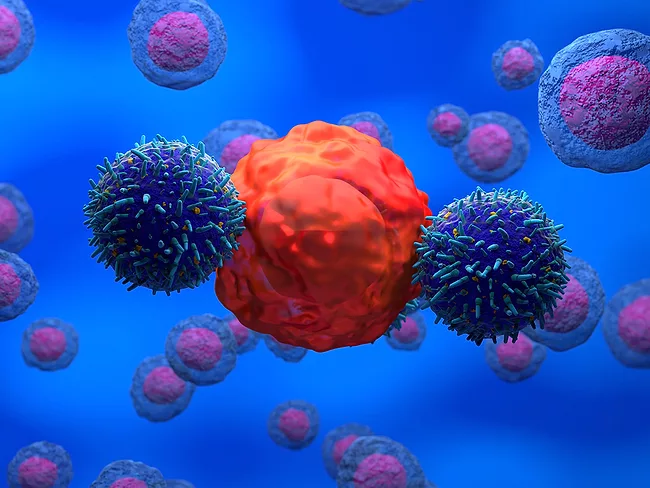
Critically shortened telomeres are known to be a key limiting factor in successful CAR T-cell immunotherapy, with cells from older patients tending to have shorter telomeres with reduced dividing capacity. As such, these cells are unable to fully eliminate malignancies and provide durable and persistent protection against cancer. So, what if you could lengthen these DNA-protein structures found at the end of chromosomes during the ex-vivo manufacturing of CAR T cells, i.e., before they are put back into the body, so increasing their potency against disease? Newly-launched firm Telos Biotech – a subsidiary company of Cambrian Bio – believes you can, with its patent-protected recombinant protein, Telovance, promising to shake up the cell therapy field.
A complete response letter (CRL) from the U.S. FDA for GC-4419 (avasopasem) is causing Galera Therapeutics Inc. to dramatically change course to survive, with the company laying off about 70% of its workforce. That layoff, which will reach across several company departments, is designed to extend the cash runway into the second quarter of 2024. The adjustment comes after Galera expanded its commercial leadership in May to prep for a potential launch of avasopasem before the end of 2023.
The accelerated clearance won by Johnson & Johnson (J&J) from the U.S. FDA for Talvey (talquetamab-tgvs) for relapsed or refractory multiple myeloma (r/r MM) in adults brings to the market the bispecific antibody that takes aim at G protein-coupled receptor class C group 5 member D, a target of interest to other developers as well.
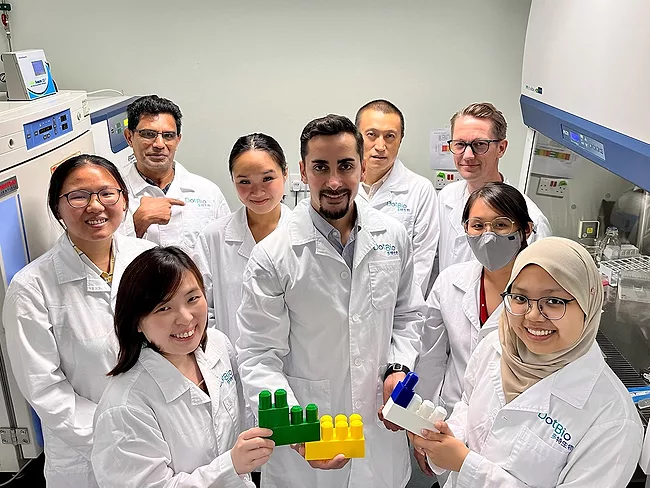
Emerging from stealth mode, new immuno-oncology company Dotbio Pte. Ltd. closed an oversubscribed $5.6 million pre-series A round to accelerate development of its multifunctional and intracellular antibody therapies.
Astex Pharmaceuticals Inc. is getting $35 million up front and up to $500 million per program as it extends its drug discovery collaboration with Merck & Co. Inc. to include small-molecule activators of the p53 tumor suppressor protein. The number of programs was not disclosed, but they will target forms of p53 that have lost their function as a result of cancer-induced mutations in the TP53 gene. The aim will be to override the mutation and restore the ability of the wild-type protein to bind DNA and perform its functions as a transcription factor.
Gracell Biotechnologies Inc. stands to gain up to $150 million from an assorted bouquet of private U.S. health care investors to lay a solid foundation for clinical trials of its leading dual-targeting CAR T-cell candidate, GC-012F, and provide a cash runway into the second half of 2026.
When looking for a name, the founders of startup Nexo Therapeutics Inc., which recently emerged from stealth mode with a $60 million series A financing and a research collaboration with the University of Texas MD Anderson Cancer Center, sought a moniker that truly captured its approach to drug development.
On Aug. 3, Sunho Biologics Inc. filed to list on the Hong Kong Exchange, armed with its antibody and immunocytokine drug pipeline and post-investment valuation of ¥1.41 billion (US$196 million).
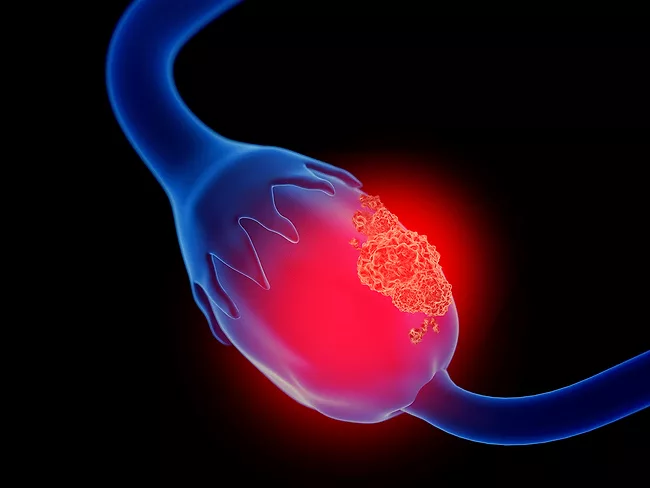
Aravive Inc.’s sole asset missed a phase III primary endpoint in ovarian cancer but the company still has studies planned for treating renal cell carcinoma and pancreatic cancer. Aravive’s stock (NASDAQ:ARAV) dwindled dramatically on Aug. 3, with shares closing 77.2% lower at 28 cents each. That’s a massive drop from heights seen in the past 12 months, as shares hit $2.46 each in March 2023 and $2.09 each in November 2022. The company plans to study the data and make a decision about whether to proceed with the other studies.
Precision medicine startup Solu Therapeutics has raised $31 million in an oversubscribed seed round to advance a therapeutic candidate based on technology that identifies cell surface, tumor-associated targets that antibodies alone fail to latch onto. The company was founded by venture capital firm Longwood Fund and has high hopes for its cytotoxicity targeting chimera platform. “[It] has the potential to unlock new tumor-associated antigens and develop molecules that deplete pathogenic immune cells and extend the half-life of small-molecule antagonists and agonists,” CEO and co-founder of Solu, David Donabedian, told BioWorld.
 RSS
RSS