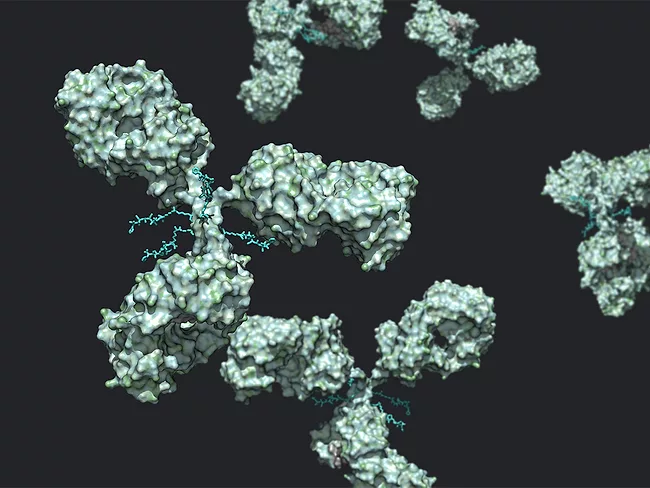
Merck KGaA has announced it is advancing M-3554, a potential first-in-class anti-GD2 antibody-drug conjugate (ADC), toward the clinic. M-3554 links an exatecan payload with an anti-GD2 antibody.
Researchers from National Health Research Institutes reported the discovery and preclinical characterization of a novel long half-life Aurora A (AURKA) inhibitor being developed for the treatment of MYC-amplified solid tumors. Lead optimization of a previously reported series of small-molecule Aurora kinase inhibitors led to the discovery of AURKA kinase inhibitor 6K465, which was then developed into the acyl-based prodrug DBPR-728.
Although details are scant, Akeso Pharmaceuticals Inc. reported that its PD-1/VEGF bispecific antibody, ivonescimab (AK-112), demonstrated statistically significant superiority as a first-line therapy for PD-L1-positive non-small-cell lung cancer (NSCLC) compared to Merck and Co. Inc.’s Keytruda (pembrolizumab).
Astrazeneca plc’s blockbuster Enhertu continued to garner attention as new data released at the American Society of Clinical Oncology (ASCO) annual meeting show the antibody-drug conjugate demonstrated strong progression-free survival in metastatic breast cancer patients. Puma Biotechnology Inc. had advances of its own at ASCO with new biomarker findings from a phase II study of alisertib, an aurora protein kinase 2 inhibitor, in endocrine-resistant metastatic breast cancer.
While Servier Pharmaceuticals LLC awaits this summer’s PDUFA date for the IDH-mutant glioma drug vorasidenib, acquired in the buyout of oncology assets from Agios Pharmaceuticals Inc., the latter unveiled positive data from a global phase III study with oral mitapivat in adults with transfusion-dependent alpha- or beta-thalassemia.
The EMA has been sent back to the drawing board to re-evaluate PTC Therapeutics Inc.’s Duchenne muscular dystrophy therapy Translarna (ataluren), after failing to get the usual rubber stamp following its recommendation in January that the drug’s conditional approval be withdrawn.
South Korea’s Genome & Co. Ltd. (KOSDAQ:314130) shares rose nearly 30% June 3 after it disclosed a potential ₩586.38 billion (US$426 million) licensing deal for its novel antibody-drug conjugate candidate with Switzerland’s Debiopharm International SA.
The U.K.’s National Institute for Health and Care Excellence recent recommendation that selective internal radiation therapy could be used to treat neuroendocrine tumors that have metastasized to the liver is a boon for patients suffering from the disease. However, there is not yet a clear pathway for these patients to receive the therapy via the national health service.
While there was much talk about the vast potential of artificial intelligence (AI) during one of the world’s largest research cancer conferences, antibody-drug conjugates (ADCs) continued to grab the lion’s share of attention as Corbus Pharmaceuticals Holdings Inc. and Takeda Pharmaceutical Co. Ltd. released new and positive data.

 RSS
RSS