As Wall Street looks ahead to phase III data due soon with Mineralys Therapeutics Inc.’s lorundrostat for uncontrolled or resistant hypertension, analysts are also weighing the odds of the firm in phase II with the same compound for obstructive sleep apnea.
Pannexin 1 (Panx1) is a high-conductance, voltage-sensitive ion channels that exhibit flexible gating behavior upon activation, enabling the passage of ions such as Ca2+, Na⁺, K⁺, and ATP. Panx1 is expressed in cardiac tissue, but its role in ATP release and electrophysiological processes affecting cardiac function is not fully understood. Researchers from Vanderbilt University Medical Center have found that in isolated ventricular cardiomyocytes, Panx1 activation during spontaneous sarco/endoplasmic reticulum Ca2+ release amplified the NCX-driven transient inward current.
Berlin Heals Holding AG recently raised over CHF7 million (US$7.8 million) in a financing round for C-MIC, a small implantable device it believes can reverse heart failure.
Several Asia biotechs this week – including Innocare Pharma Ltd., Akeso Pharmaceuticals Inc., Sanbio Co. Ltd. and Ascletis Pharma Inc. – unveiled the start of new late-stage clinical trials or interim findings from early stage studies.
The lung and thrombosis may play a key role in cancer and metastasis progression, according to a collaborative study led by Cornell University scientists.
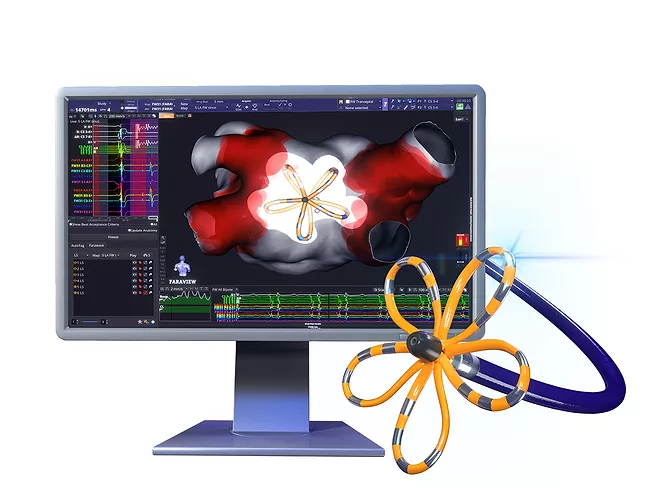
Boston Scientific Corp. recently received CE mark for its navigation-enabled Farawave Nav ablation catheter and Faraview mapping software to be used with its Farapulse pulsed field ablation (PFA) system. The technologies are expected to improve physicians’ understanding of patients’ atrial fibrillation to enable treatment using the Farapulse PFA system.
Pulmonary hypertension, despite advances in treatment, still has a poor prognosis, which is often associated with right heart failure, and for which pulmonary arterial hypertension (PAH) is a severe form. There is an urgent need to unravel the molecular mechanisms behind PAH and identify new targets, especially those involved in the remodeling process. The proliferation and resistance to apoptosis of pulmonary artery smooth muscle cells are key contributors to pulmonary vascular remodeling in PAH.
Researchers from Tikkunlev Therapeutics Inc. and the University of Utah have presented preclinical data on TLT-101, a gene therapy consisting of an adeno-associated virus serotype 9 (AAV9) vector encoding cardiac bridging integrator 1 (cBIN1) designed for the treatment of heart failure.
The lung and thrombosis may play a key role in cancer and metastasis progression, according to a collaborative study led by Cornell University scientists. In the nonmetastatic lung microenvironment of several cancer types, the development of a prothrombosis niche promotes metastasis formation through the release of small extracellular vesicles loaded with an integrin protein.
Med-tech companies focusing on cardiovascular diseases or neurological conditions, women’s health or robotic surgery, will find European investors willing to deploy capital into their stories. European venture capital firms are excited about the continuing innovation and opportunities in the sector.
 RSS
RSS