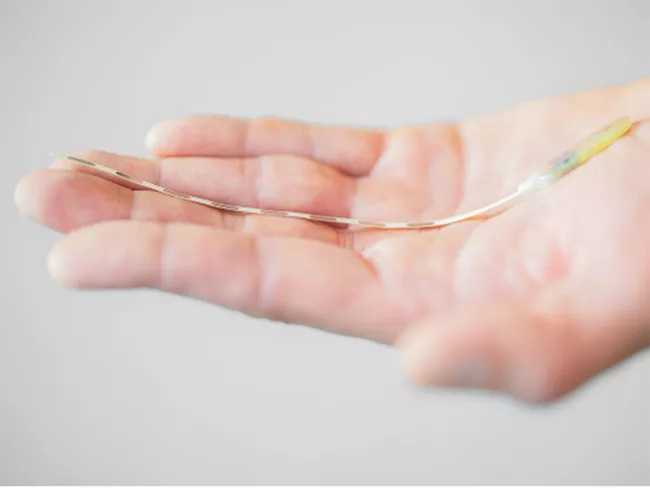
London-based Livanova plc. has petitioned the U.S. CMS to cover vagus nerve stimulation device for treatment-resistant depression without the need for a clinical trial — a change that would eliminate the costly and cumbersome coverage with evidence development mechanism.
As it advances its nonopioid analgesic ATX-101 breakthrough therapy through a phase IIb registration trial, Allay Therapeutics secured $57.5 million in a series D round, which included an investment from the company’s Japanese partner. ATX-101, a configuration of sodium ion channel blocker bupivacaine and a biopolymer, which is in a phase IIb registration study, is designed to offer pain relief following total knee arthroplasty.
Paradromics Inc. became the latest company developing a brain-computer interface (BCI) system to implant its technology, Connexus, into a human. The device was safely implanted, it recorded electrical brain signals and was removed intact in less than 20 minutes. Paradromics hopes to begin clinical trials later this year.
Salvia Bioelectronics BV raised $60 million in a series B financing round for its minimally invasive implantable neuromodulation device, Mysalvia therapy, which treats chronic migraine. The funds will be used for clinical trials and obtaining regulatory approvals in the U.S., Europe and Australia.
In what represents their first patenting, researchers from New York’s Stony Brook University filed for protection for development of a system and method that uses computer vision to analyze microscale facial movements in order to objectively help diagnose, monitor, and treat disorders of consciousness.
A collaboration of scientists from the NIH Brain Initiative consortium has published eight simultaneous studies in Neuron, Cell, Cell Genomics, Cell Reports and Cell Reports Methods, with the results of the Armamentarium project, a new set of gene therapy tools for the research and treatment of human brain disorders. The methodology, based on genetic techniques, RNA detection, genomic enhancers and viral vectors, is designed to access different CNS cell types, neuronal and non-neuronal cells, with common and reproducible protocols now available for any laboratory.
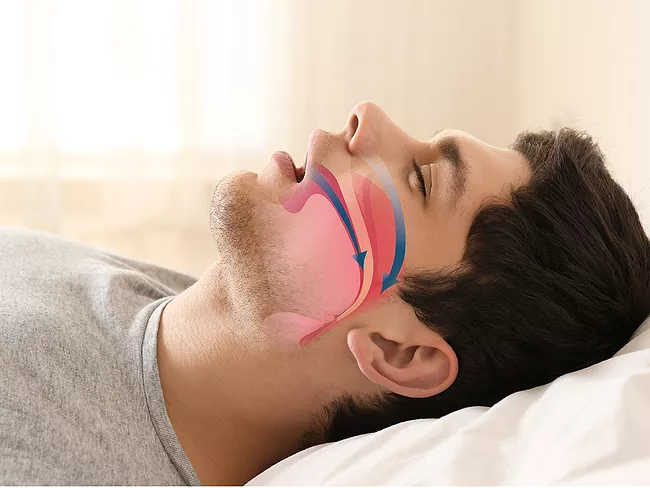
Mirroring results reported in a phase IIb study, Apnimed Inc.’s first of two pivotal trials testing AD-109 as an oral therapy in obstructive sleep apnea hit primary and secondary endpoints. Should similar findings emerge from a second phase III trial, expected to read out in a couple of months, the privately held firm anticipates a U.S. NDA filing in early 2026.
A low-intensity transcranial ultrasound stimulation device, developed by Sonomind SAS, was proven to be safe and effective in treating patients suffering from drug-resistant depression. The results of a study published in Brain Stimulation showed a 61% reduction in the depressive symptoms of patients treated with the device over a five-day period, with no serious adverse events.
Mentaily Ltd. raised $3 million in seed funding for its AI-powered mental health diagnosis, triage and support tool, Liv. The platform is designed to help patients suffering from psychological distress and mental illness.
The U.K. National Institute for Health and Care Excellence (NICE) endorsed the use of the Orbit system by Mindtech Ltd. as a treatment for tics and Tourette syndrome.
 RSS
RSS