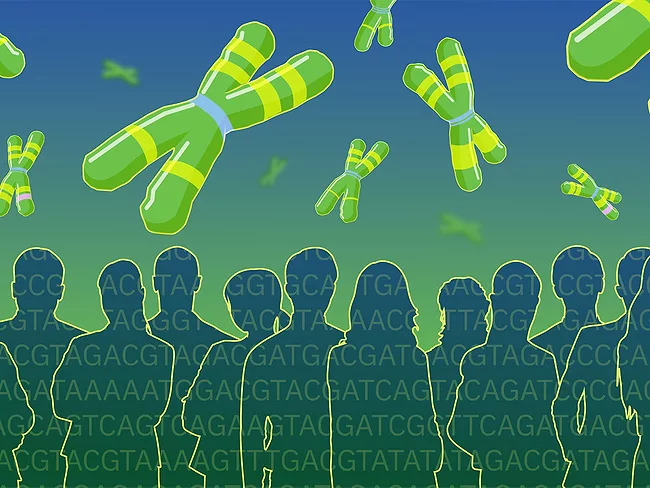
The human genome has yielded another round of secrets with the publication of two back-to-back papers in Nature on July 23, 2025. Both studies re-sequenced probands from the open-access 1000 Genomes Project, which was one of the first projects to sequence individuals from diverse populations.
The human genome has yielded another round of secrets with the publication of two back-to-back papers in Nature on July 23, 2025. Both studies re-sequenced probands from the open-access 1000 Genomes Project, which was one of the first projects to sequence individuals from diverse populations. While one paper “goes very deep and tries to reconstruct a few genomes to basically near completion,” the other specifically looked at structural variants in a larger number of genomes. Together, they give new insights into genome variation.
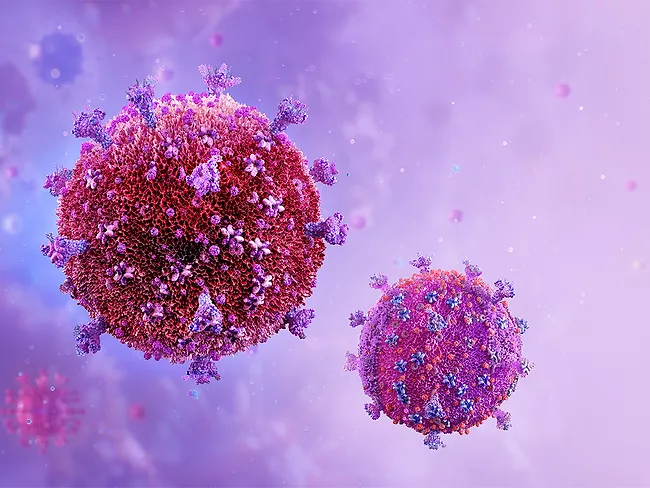
We all look different to HIV, a virus that destroys the immune system. The defensive cells record every interaction with foreign agents, infections from viruses and bacteria, but also with mechanisms occurring within the body, such as microbiome metabolism, the effects of aging, or the development of diseases. At a preconference session at the 13th IAS Conference on HIV Science (IAS 2025), scientists explained the interactions of different microorganisms with HIV.
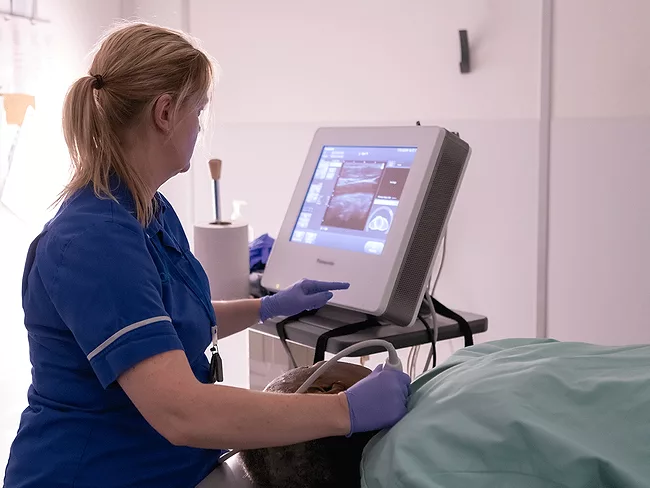
After a 10-year project and a £60 million (US$80 million) investment, the UK Biobank has completed the whole body scans of 100,000 volunteers and is making the 1 billion images available for researchers worldwide.
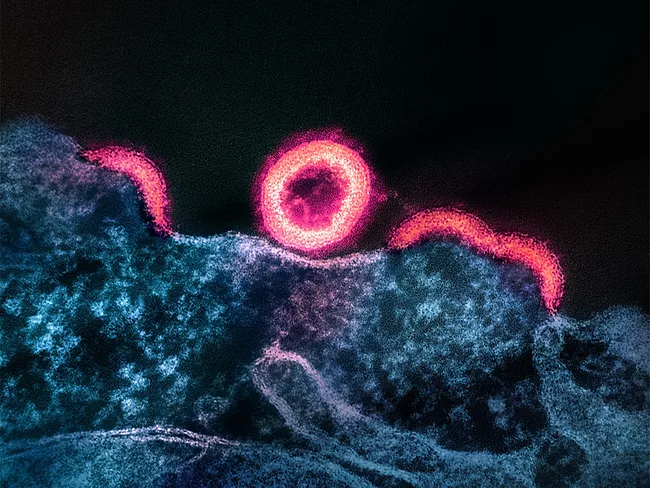
While people living with HIV can lead virtually normal lives thanks to antiretroviral therapy (ART), HIV persists in a latent state within cellular reservoirs that scientists do not know how to eliminate. “Transcription is a critical step in the viral life cycle. … But there are currently no drugs suppressing HIV transcription, and that may be one of the reasons why current antiretroviral therapy is not curative,” Melanie Ott told the audience at the 13th IAS Conference on HIV Science this week in Kigali, Rwanda.
The switch will be flicked today to make the world’s largest dementia-related proteomics dataset freely available to researchers, at the same time as members of the consortium which compiled it publish the proteomics signatures of major neurodegenerative diseases that they uncovered in a first trawl of the data.
An experimental drug for treating diabetes and obesity has been shown to lower blood sugar levels and increase fat burning. It is a β2-adrenergic receptor (β2AR) agonist that mimics the effects of physical exercise by activating skeletal muscle metabolism. Unlike GLP-1-based treatments such as semaglutide and tirzepatide, this new compound, developed by researchers at the Karolinska Institute, Stockholm University, and the biotech company Atrogi AB, does not suppress appetite or cause muscle loss.
In recognition of the fact that diversity, equity and inclusion are necessary prerequisites for precision medicine, the European Academy of Neurology announced the launch of a DEI Hub at its 11th Congress, which is being held in Helsinki through June 24.
At the 11th Congress of the European Academy of Neurology, which was held in Helsinki June 21 to June 24, researchers presented new data on using CAR T cells in autoimmune neurological conditions.
In recognition of the fact that diversity, equity and inclusion (DEI) are necessary prerequisites for precision medicine, the European Academy of Neurology (EAN) announced the launch of a DEI Hub at its 11th Congress, which is being held in Helsinki through June 24. “We know now that when we talk about personalized medicine, we have to understand that talking about stroke, for example, in a woman is different than talking about stroke in a man,” EAN president Elena Moro told the audience at the opening session of the conference.
 RSS
RSS