Integra Lifesciences Holdings Corp. agreed to acquire Acclarent Inc. from Johnson & Johnson’s Ethicon Inc. subsidiary for $275 million in cash at closing with a further $5 million contingent on achievement of certain regulatory milestones.
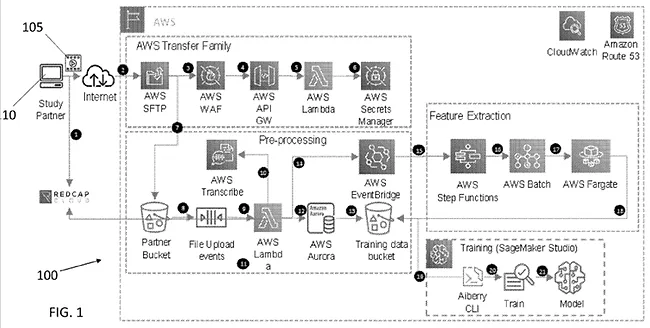
Patent applications from Bellevue, Wash.-based Aiberry Inc. describe further aspects of its artificial intelligence (AI)-powered mental health screening platform that is designed to improve efficiency and save time for healthcare providers.
Neuronetics Inc. gained expanded approval in Japan for its transcranial magnetic stimulation (TMS) system to treat major depressive disorder called the Neurostar TMS, helping the Malvern, Pa.-based company increase its footprint in Asia.
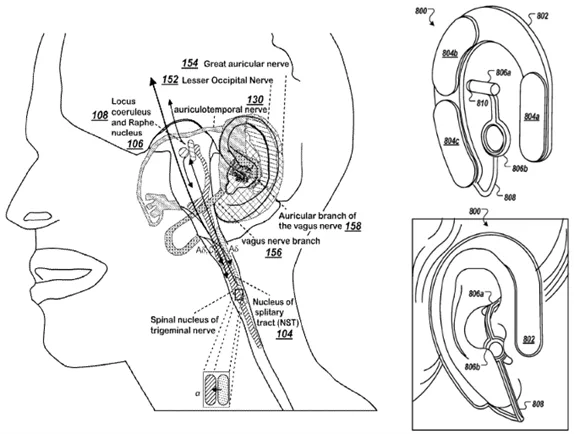
Spark Biomedical Inc. is seeking patent protection for the use of its transcutaneous auricular neurostimulation (tAN) platform for treating stress and improving performance in stressful situations while controlling bleeding.
Rewalk Robotics Ltd. has integrated advanced sensing technologies and artificial intelligence (AI) into its latest exoskeleton prototype to enable autonomous decisionmaking. This milestone, coupled with Rewalk’s capabilities, holds enormous potential to create a new generation of exoskeletons that are more intuitive and respond to real-world conditions that users encounter daily, Rewalk CEO Larry Jasinski told BioWorld.
Apollo Neuroscience Inc. recently introduced a new software called Smartvibes for its Apollo wearable device to help people lower their stress levels and sleep better. There are a growing number of wearable technologies that have sensors that continuously measure physiological signals to help individuals monitor and manage their health conditions.
Using microglia and an unbiased screening method, investigators have identified almost 60 previously unknown targets for γ-secretase. Investigators from KU Leuven and colleagues published their results in Molecular Cell on Nov. 16, 2023.
Stanford University researchers are seeking patent protection for a medical device for performing endovascular surgical procedures, such as thrombectomy, rotablation, drug delivery and treating brain aneurysms. The device includes a magnetically actuated untethered rotation device, i.e., a magnetic spinner, that can navigate in blood vessels through its spinning-enabled propulsion.
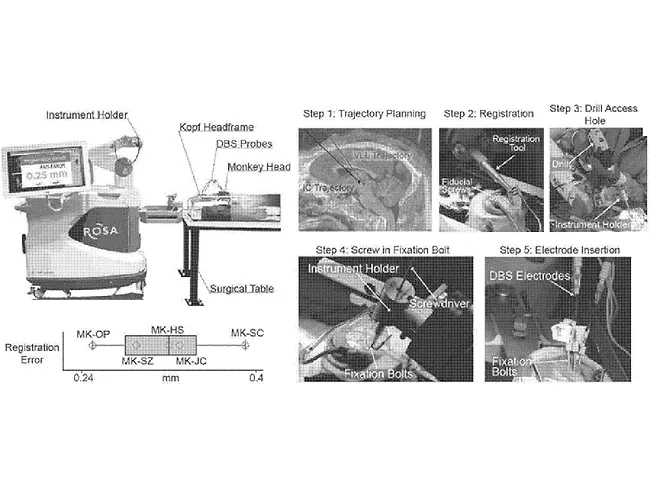
Researchers from the University of Pittsburgh seek patent protection for a method of treating motor disorders by applying an electrical stimulus to neurons in the thalamus. The invention is based on their discovery that deep brain stimulation of specific lateral areas in the thalamus leads to improvements in motor outputs of voluntary movements affected by motor disorders.
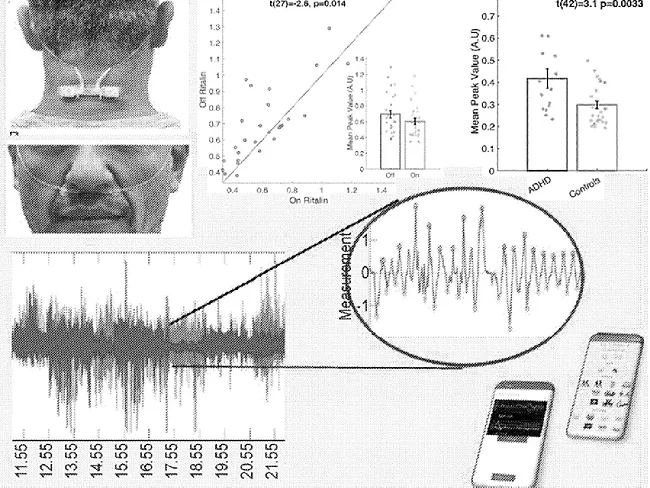
Researchers from the Weizmann Institute of Science in Rehovot, Israel, are seeking – through the university’s commercial arm, Yeda Research and Development Co. Ltd. – to gain patent protection for methods and systems for detecting and treating attention deficit hyperactivity disorder (ADHD) that are based on nasal respiration parameters.
 RSS
RSS