Matricelf Ltd. has initiated a pivotal IND-enabling efficacy study evaluating its engineered human neural tissue implant for the treatment of chronic spinal cord injury.
IMU Biosciences Ltd. has closed its series A at £40 million (US$53.9 million), adding £28.5 million to the initial close in January 2024, and bringing the total raised since the company’s formation in 2021 to £45 million. Since that first close, IMU has built what is claimed as the world’s largest high-definition immune system dataset, with almost 25,000 profiles of healthy volunteers and disease-specific patient cohorts.
Conexeu Sciences Inc. has launched a preclinical development program for B.R.E.A.S.T. (Bio-Regenerative Ergonomically Architected Smart Tissue), its 3D-printed bioregenerative breast matrix, at the Wake Forest Institute for Regenerative Medicine (WFIRM), a leading regenerative medicine research organization.
It is not surprising that a large Ebola outbreak would be considered a public health emergency of international concern. But the current PHEIC is notable for the speed with which it was declared, speaking to the urgency of the situation. World Health Organization Director-General Tedros Adhanom Ghebreyesus declared the outbreak a PHEIC on Sunday, May 17, without first convening an emergency committee. That step is unprecedented.
Researchers from Renbio Inc. and Louisiana State University investigated the delivery of plasmid DNA encoding new glucagon-like peptide-1(GLP-1)-based biologics with MYO (Make Your Own) technology as a new therapeutic strategy. This approach ensures the continuous production of GLP-1-based biologics for an extended period, overcoming the need for weekly dosing.
Artificial intelligence tools are springing up at multiple points along drug discovery and development, but despite the hype, as yet there is minimal return on investment (ROI). “I would say a lot of companies sort of get this big excitement about AI, but then when you look at how much ROI they get, it’s actually very little. And that’s because the workflow and the process, end-to-end, isn’t mapped to really understand where AI can truly make an impact,” said Laura Matz, chief science and technology officer at Merck KGaA.
A new metasurface design strategy that replaces rigid order with “engineered disorder” could significantly increase how many optical functions can be integrated into a single ultra-thin device without increasing size or complexity, according to a study published in Nature Communications. The study challenges a longstanding assumption in optical engineering that highly ordered, periodic structures are required to precisely control light.
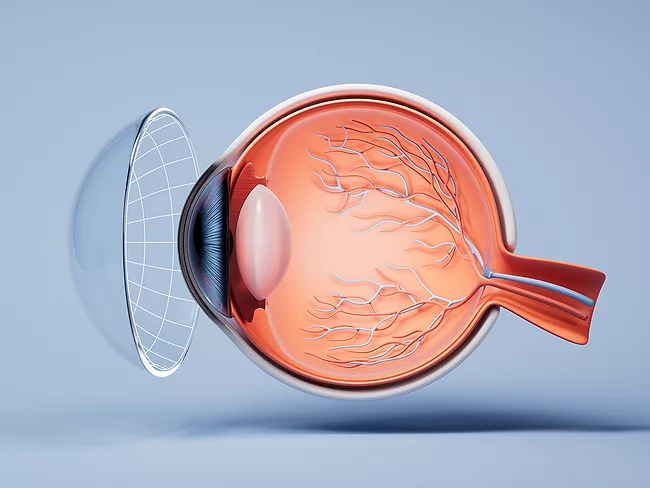
A smart polymer contact lens measures intraocular pressure (IOP) in real time and automatically releases medication into the eye when IOP goes beyond a critical limit. This technological advance, developed by scientists at the Terasaki Institute for Biomedical Innovation (TIBI), could enable personalized glaucoma therapy, avoiding poor patient adherence to their prescribed regimen and eliminating the need for bulky electronic devices. Animal models tolerate it well and, although the load is concentrated at the edges of the lens, it is still unknown how it could affect visual acuity.
In a publication in Molecular Pharmaceutics, researchers from Fudan University Shanghai Cancer Center China present the design and construction of a positron emission tomography-computed tomography (PET-CT) molecular imaging probe that accurately targets PRMT5, enabling real-time dynamic visualization and quantitative detection of PRMT5 expression levels.
Insitro Inc. has expanded its strategic collaboration with Bristol Myers Squibb Co. to advance a broadened portfolio of therapeutic programs for amyotrophic lateral sclerosis (ALS).
 RSS
RSS