Zelluna ASA has established a collaboration with Etcembly Ltd. that will focus on the engineering of high-affinity, tumor-specific T-cell receptors targeting KKLC1.
Merck Sharp & Dohme LLC (MSD) has prepared and tested new positron emission tomography (PET) agents for binding and imaging α-synuclein (SNCA) for the diagnosis of Parkinson’s disease.
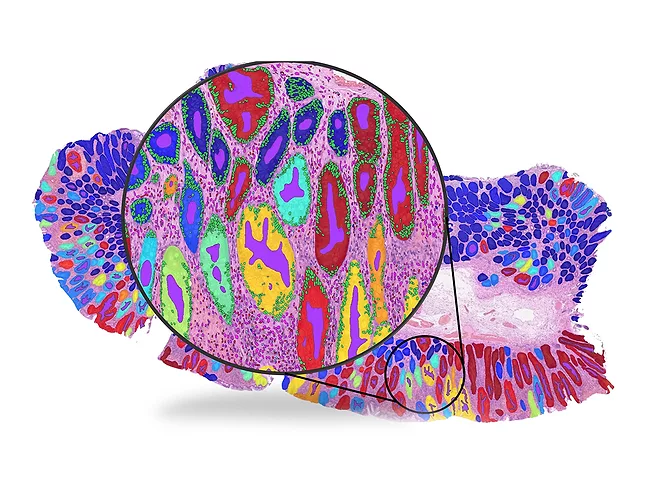
Computational pathology, which assesses molecular-level features of diseases directly from tissue images (rather than testing the tissue via methods such as staining or sequencing) is making rapid strides.
Cancer cells expand through mutations – but not just through mutations. They also change their behavior in the absence of underlying genetic alterations. Such plasticity helps the cells both adapt to the cellular stress fueled by out-of-control growth and resist targeted and chemotherapies alike. Investigators from Memorial Sloan Kettering Cancer Center and Huazhong Agricultural University have gained new insights into the underlying mechanisms of plasticity.
In October, the Nobel Committee awarded the 2025 Nobel Prize in Physiology or Medicine to Shimon Sakaguchi, Mary Brunkow and Fred Ramsdell for their discoveries in the field of autoimmunity. As has become typical for the scientific Nobel Prizes, the award-winning research is by now several decades old. But the discoveries were the basis for ongoing research into how to prevent autoimmunity that notched significant wins in 2025, in both basic research and in the clinic.
Researchers at the University of Sydney have uncovered a mechanism that may explain why glioblastoma returns after treatment, and the world-first discovery offers new clues for future therapies. Glioblastoma is one of the deadliest brain cancers, accounting for about half of all brain tumors, with a median survival rate of just 15 months. Despite surgery and chemotherapy, more than 1,250 clinical trials over the past 20 years have struggled to improve survival rates.
The UK Health Security Agency (UKHSA) has identified a new recombinant strain of mpox (formerly monkeypox) that contains elements of clade Ib and clade IIb of the virus, in a traveler who recently returned from Asia. In a paper describing the new strain, the researchers at UKHSA say it is not possible to determine from a single genome how long the recombinant virus has been in circulation, or whether it will have a fitness benefit over currently circulating lineages.
Researchers from the Chinese Institute for Brain Research, the Chinese Academy of Medical Sciences, and their collaborators have identified adenosine as the driving force behind the rapid, fast-acting antidepressant effects of ketamine and electroconvulsive therapy (ECT). “Our journey into this area of research began over a decade ago, around 2013, when the clinical world was buzzing with excitement about ketamine's remarkably rapid antidepressant effects,” Minmin Luo, co-senior author of the study, told BioWorld.
South Korean researchers led by Lee In-suk of Yonsei University have reported the most complete oral microbiome catalog to date, with more than 72,000 genomes. Detailed in Cell Host & Microbe on Nov. 12, 2025, the database is expected to serve as a universal platform for academia and enable “precision microbiome medicine” for the industry, Lee told BioWorld.
The U.K. government has published a road map for phasing out animal testing in life sciences research and announced £75 million (US$98.6 million) for work to develop nonanimal models, leaving scientists concerned because they say, in many cases, there can never be meaningful alternatives to using live animals.

 RSS
RSS