The U.K. government has published a road map for phasing out animal testing in life sciences research and announced £75 million (US$98.6 million) for work to develop nonanimal models, leaving scientists concerned because they say, in many cases, there can never be meaningful alternatives to using live animals.
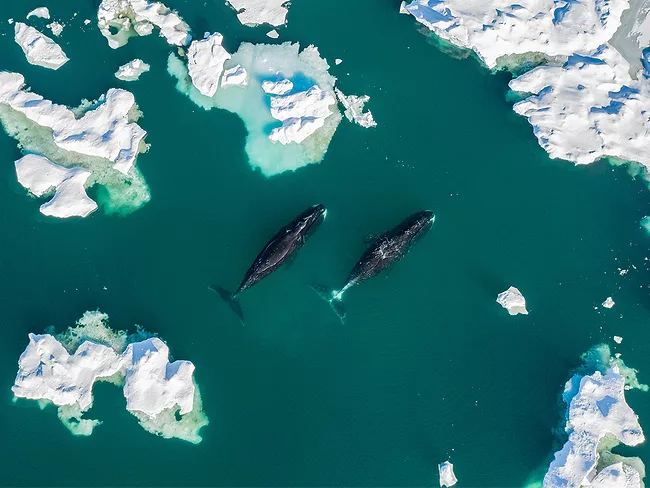
Bowhead whales (Balaena mysticetus) live year-round in the icy or near-icy waters of the Arctic and sub-Arctic. Although they migrate with the seasonal cycles of ice formation and melting, they never reach the warmer waters visited by other large marine mammals. Their adaptation to low temperatures may have also enabled them to live longer and avoid cancer, a disease closely linked to aging.
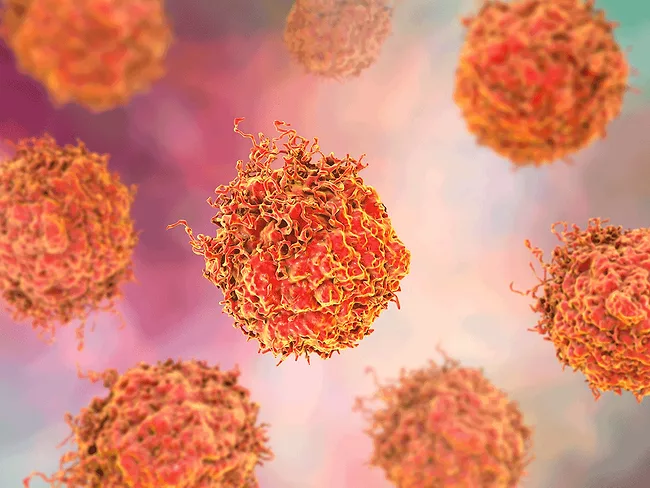
Two enzymes from the protein disulphide isomerase (PDI) family enable prostate cancer cells to grow, survive, and resist treatment. This discovery, however, could be taken as an advantage to improve therapy for this type of tumor. Blocking the function of PDIA1 and PDIA5 leads to cancer cell death and a reduction in tumor size.
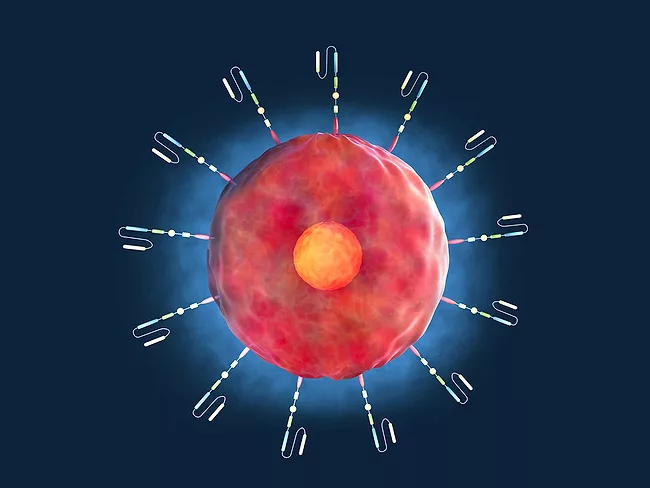
As the many challenges facing cell therapies are being addressed, the CAR T field continues to evolve beyond its original design of T cells engineered to target hematological malignancies. During the 32nd Annual Congress of the European Society of Gene and Cell Therapy (ESGCT), held in Seville Oct. 7-10, several studies showed how this technology is being redefined as programmable and adaptable immune cells with expanded functional versatility.
The 2025 Nobel Prize in Chemistry “is a story full of holes, but with enormous capacity to absorb all your attention,” Heiner Linke told reporters. “And other things.” Linke is Chair of the Nobel Committee for Chemistry. On Oct. 8, 2025, the committee announced that it has awarded the 2025 Nobel Prize in Chemistry to Susumu Kitagawa, Richard Robson and Omar Yaghi “for the development of metal-organic frameworks” (MOFs).
The Nobel Committee announced today that it has awarded the 2025 Nobel Prize in Physiology or Medicine to three scientists for their discovery of regulatory T cells, which are a critical part of the way the body prevents autoimmune attacks.
Pharma companies are collaborating to boost the power of artificial intelligence (AI) in drug discovery by allowing access to proprietary structural data to train a large language model. Each of the partners is contributing data from several thousand experimentally determined protein:ligand interactions, creating one of the most diverse datasets and the richest chemistry assembled to date for model training.
About five months after the U.S. FDA disclosed its roadmap to move away from animal testing in favor of new approaches for biopharma drug development, the U.S. National Institutes of Health (NIH) said it is awarding $87 million in contracts over three years to launch the Standardized Organoid Modeling Center.
Globally, over half of people living with HIV are women. But in clinical cure trials, they make up only about 20% of participants. And that gender imbalance is causing researchers to miss out on ways to improve cure strategies. Because women’s immune systems appear to be better at controlling HIV infection in a way that silences the reservoir – the provirus integrated into host cells in infected persons.
A new generative AI model trained on UK Biobank data can simultaneously forecast the risks and timing of developing over 1,000 different diseases a decade into the future. The developers applied similar algorithmic concepts to those used to develop large language models like ChatGPT and Gemini to build the model, using medical records from 402,799 participants in UK Biobank.

 RSS
RSS