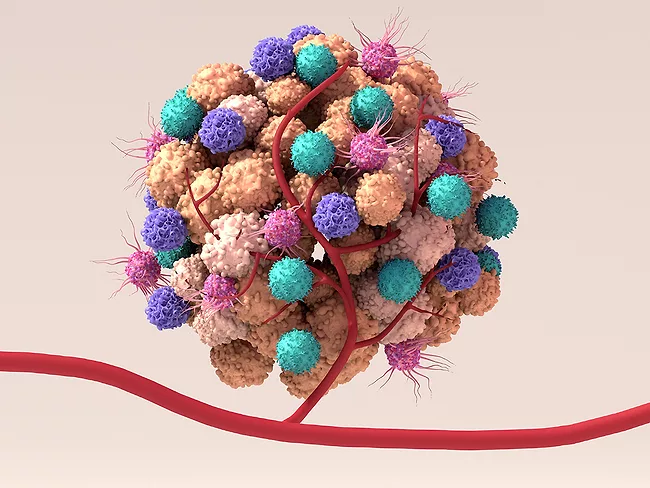
Two recent studies have reported new insights into the role of the tumor-associated microbiome in both drug response and metastasis. Researchers working at the Fred Hutchinson Cancer Center, Seattle, reported in the Nov. 16, 2022, issue of Nature that bacteria can promote the spreading of cancer as single cells with recruitment of myeloid host cells. In a parallel publication, the same team reported in the Nov. 15, 2022, issue of Cell Reports that the primary chemotherapy used to treat colorectal cancer (CRC), 5-fluorouracil (5-FU), was less effective when the tumor included bacteria that were insensitive to 5-FU antimicrobial activity.
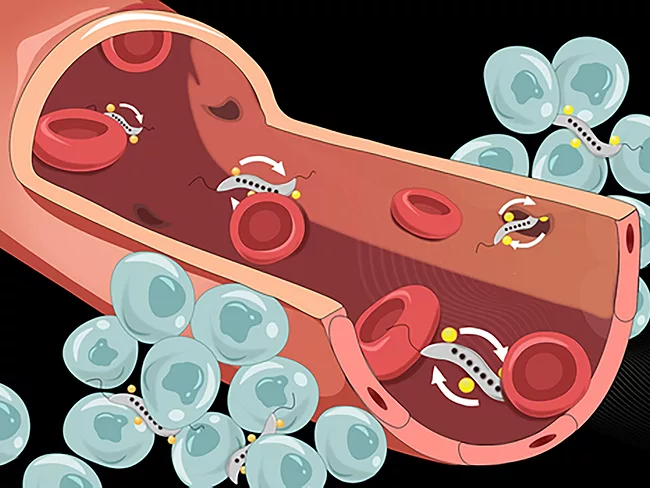
A new method for controlling naturally magnetized bacteria has improved the prospects of applying them as vehicles for intratumoral delivery of cancer drugs and in hyperthermia therapy. The advance will provide a better way of directing the movement of systemically administered bacteria, using external magnetic fields to target them to tumors sited deep in the body. It also points to a possible route for engineering existing bacteria-based anticancer constructs for better targeting.
Circuit dysfunction is clearly recognized as a driver of neuropsychiatric disease, and some neurodegenerative diseases such as Parkinson’s disease. And at the European Committee for Treatment and Research in Multiple Sclerosis (ECTRIMS) 2022 Congress, researchers made an argument that the same is true in multiple sclerosis (MS). Such a lens could explain the radiological-clinical paradox between the amount of structural damage and clinical severity.
The Nobel Prize in Physiology or Medicine 2022 was awarded to Svante Pääbo today "for his discoveries concerning the genomes of extinct hominins and human evolution." Pääbo, who is currently the director of the Max Planck Institute for Evolutionary Anthropology in Leipzig, Germany, and his colleagues overcame extreme technical challenges to sequence the DNA of ancient hominids – because after tens of thousands of years, there is no such thing as aging well for DNA.
Communication between adipose tissue and the brain increases the risk of cognitive impairment in patients with insulin resistance through extracellular vesicles (EVs) containing microRNAs (miRNAs). Neurons could be damaged when these nucleotides reach the hippocampus guided by membrane proteins in prediabetic overweight people.
Collagen is the most abundant protein in the human body, which would seem to make it an unlikely source for an immunotherapy target. But it is where researchers from Immatics Biotechnologies GmbH and the University of Pennsylvania have found a target that was expressed on stromal cells in a number of different solid tumors, but very rare in normal tissues.
 RSS
RSS