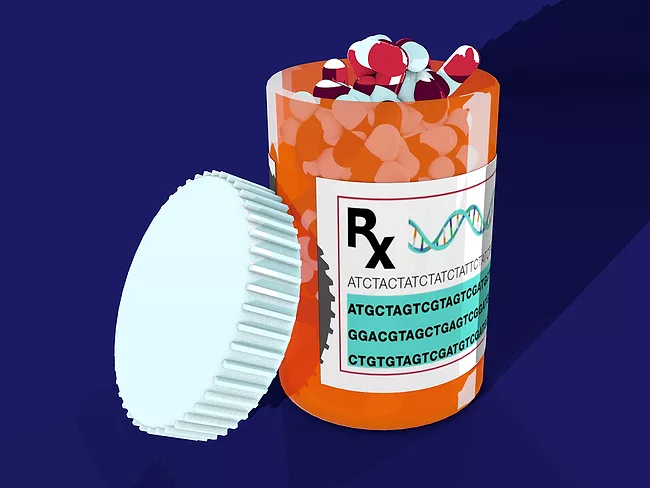
A landmark, real-world study in the U.K. has demonstrated that combining whole genome sequencing with clinical data enabled tailored cancer treatment and improved outcomes. At one health care center, having DNA sequence data led to changes from usual standard of care in 25% of cases. “Mostly, [patients] got into clinical trials; some got medicines they wouldn’t have got. Others avoided medicines because their genetic make-up suggested that if they were exposed to the medicines, they would be at risk of harm,” said Mark Caulfield, professor of clinical pharmacology at Queen Mary University of London, who is co-author of a paper outlining the findings in Nature Medicine, Jan 11, 2024.
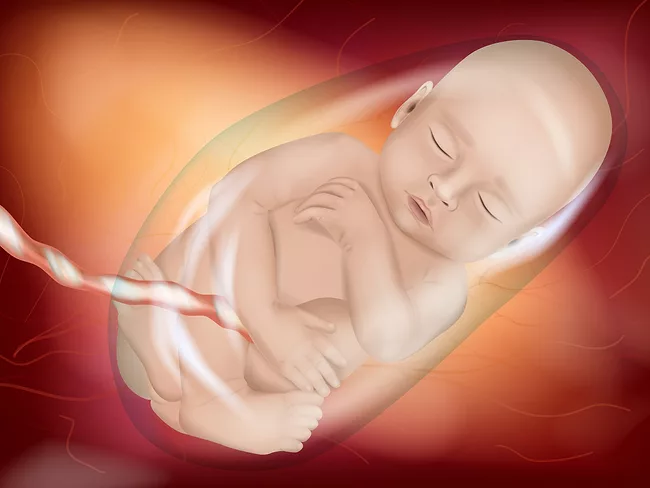
Listening to conversations between a mother and her unborn child on the cellular level could inform how the pregnancy is going and prevent complications. Three scientific groups from the Eunice Kennedy Shriver National Institute of Child Health and Human Development (NICHD), in collaboration with Wayne State University and Michigan State University, have used single-cell RNA sequencing techniques to decipher these words, identify the cellular language of these interactions in the placenta and establish a cellular atlas.
Metastatic colorectal cancer remains the second leading cause of cancer-related mortality globally, but treatment options are generally limited to RAS mutation status for anti-EGFR therapies. Researchers at the Walter and Eliza Hall Institute of Medical Research (WEHI) in Melbourne developed a method to grow organoids from patient-derived tumor samples that achieved 83% accuracy in predicting patient responses to different therapies.
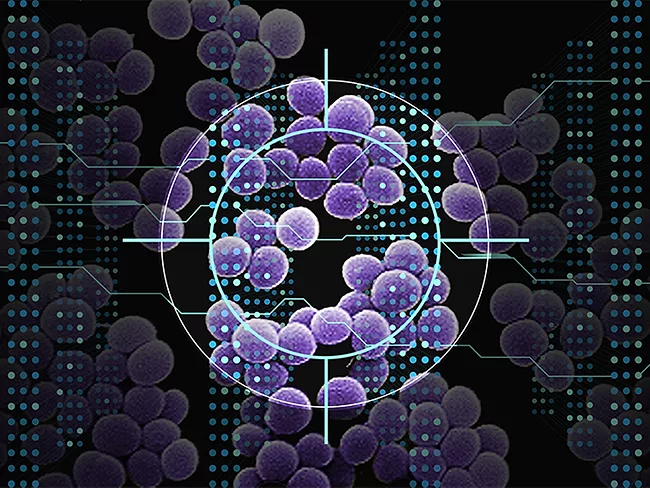
Researchers have used explainable artificial intelligence (explainable AI) to find structurally new antibiotics with minimal toxicity. They reported their findings online in Nature on Dec. 20, 2023. In animal testing, compounds identified via the method showed that they had activity against drug-resistant gram-positive bacteria including methicillin-resistant Staphylococcus aureus (MRSA), one of the most serious bacterial public health threats.
The Nobel Prize-winning modification that prevents the innate immune system from recognizing injected mRNA as foreign and blocking transcription of the protein it encodes has been found on some occasions to cause ribosomal frameshifting.
One of the difficulties for preventing the evolution of a tumor is that cancer progression can be promoted by undifferentiated or migrating cells whose states could follow different directions. At the 40th edition of Barcelona Biomed conferences at the Institute for Research in Biomedicine (IRB Barcelona), which took place from Nov. 27 to 29, 2023, and is entitled “Cancer in Context: Cellular, Tissue, and Organismal Determinants of Malignant Fates,” Angela Nieto presented her latest data on epithelial-to-mesenchymal transition (EMT).
Using microglia and an unbiased screening method, investigators have identified almost 60 previously unknown targets for γ-secretase. Investigators from KU Leuven and colleagues published their results in Molecular Cell on Nov. 16, 2023.
Artificial intelligence (AI) is in full development, and advances are already used in many fields, including medicine. In oncology, these tools can identify a tumor in an image with 99% accuracy. But they can also miss it if the algorithm was not developed with the right data or the correct decisions. The 2023 European Society for Medical Oncology (ESMO) Congress brought together in Madrid doctors and deep learning experts to discuss the challenges and advances of AI in this area. And what’s better than asking an AI what its trainer has told it about AI?
The mRNA technology used in vaccines against viral infections could also be developed for cancer therapies. A group of scientists has designed a circular RNA (circRNA) encapsulated in lipid nanoparticles (LNPs) that acts in the mitochondria of tumor cells through the protein gasdermin-D (GSDMD) and reduces adenocarcinoma. The work was published on Oct. 16, 2023, in Nature Cancer.
For individuals who develop an unexpected psychosis, there is something to be said for testing them for autoimmune antibodies. And something against. At the 36th Congress of the European College of Neuropsychopharmacology (ECNP) this week, the topic was worth a controversy session, where speakers presented the pros and cons of the approach. Currently used tests have a specificity of 99%. But as Ester Coutinho, consultant neurologist at the University of Coimbra, pointed out, the validity of diagnostic tests depends on the prevalence of the disorder one is looking for as well. Coutinho estimated that autoimmune psychoses account for 1% of psychoses overall.
 RSS
RSS